Specification and Category Reference
Complexity lives at the intersection of category, player count, age gate, and playtime. The table below is built only from the published product data. Where a figure is not provided by the listing, it reads "Not stated" rather than a guess. Use it to see how weight cues show up in the specs you can actually verify.
| Game | Category cue | Players | Age | Stated playtime | Price |
|---|---|---|---|---|---|
| Candy Land | Children's race game | Not stated | 3 and up | Not stated | $12.99 |
| Trouble | Children's race game | 2-4 | 5 and up | Not stated | $9.84 |
| Guess Who? | Deduction guessing game | Not stated | 6 and up | Not stated | $19.99 |
| Scrabble | Word / crossword game | 2-4 | 8 and up | Not stated | $21.92 |
| Trivial Pursuit: Family Edition | Trivia recall game | 2+ | 8 and up | Not stated | $10.99 |
| Airport Empire | Economic strategy game | 2 | 10 and up | 60-90 min | $59 |
Last Updated: July 28, 2026
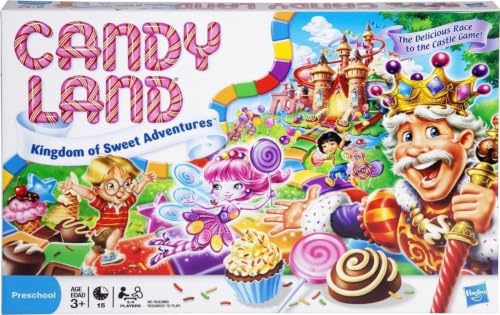
- CLASSIC BEGINNER GAME: Do you remember playing Candy Land when you were a kid. Introduce new generations to this sweet kids' board game
- RACE TO THE CASTLE: Players encounter all kinds of "delicious" surprises as they move their cute gingerbread man pawn around the path in a race to the castle

- FUN FAMILY GAME FOR KIDS: Remember playing the original Trouble board game as a kid? Introduce a new generation to classic Trouble gameplay with this Trouble game for kids
- EASY TO LEARN AND SET UP: The Trouble game is easy to play and quick set up. The object of the game is simple: the first player to get all of their game pieces around the board
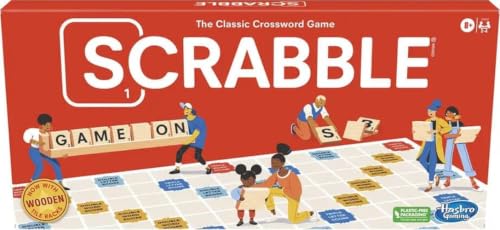
- CLASSIC CROSSWORD GAME: Get family and friends together for a fun game night with the Scrabble board game! Put letters together, build words, and earn the most points to win
- WOODEN TILES AND RACKS: This edition of the Scrabble game features 100 wooden letter tiles and wooden tile racks. The textured gameboard helps tiles stay on the board

- GUESS WHO? GAME WITH PEOPLE AND PETS: Swap your set with pets! In this Guess Who? game, your little ones can have loads of fun trying to guess their opponent’s mystery person or
- 2 SETS OF CHARACTERS: Is it a human? Or a cat or dog? This edition of the favorite kids game includes people face cards and pets face cards, so kids can choose to play using

- BUILD YOUR AIRPORT EMPIRE — Start with a small airstrip and grow it into a thriving international airport. Construct buildings that boost your profitability, customer
- STRATEGIC 2-PLAYER GAMEPLAY — Perfect head-to-head competition with deep strategic decisions every turn. Balance short-term profits against long-term expansion while adapting to
The Short Answer
A complexity or "weight" rating is a single number, usually on a 1 to 5 scale, that estimates how hard a game is to learn and play, where 1 is a light family game and 5 is a heavy strategy game. To compare two games fairly, put their weight numbers side by side, then cross-check the things that move real difficulty at your table: player count, minimum age, and playtime. The number tells you the ceiling; those three specs tell you whether that ceiling fits the people you are actually playing with.
What a Weight Rating Actually Measures
Weight is a crowd-sourced average of how mentally demanding a game feels. It bundles rules length, the number of interacting systems, how much forward planning is rewarded, and how long a turn takes to resolve. It is not a quality score. A 4.2-weight game is not "better" than a 1.5-weight game; it is heavier.
Why the Same Game Feels Different at Two Tables
The rating is an average across many people, so it hides variance. A word game leans on vocabulary, a trivia game leans on recall, and an economic strategy game leans on planning. Two games can share a weight of 2.0 and still feel nothing alike, because the type of thinking they demand is different. Always read the weight together with the game's category.
Weight Versus Age Rating
People conflate the manufacturer age rating with complexity. They are not the same axis. An age rating is a safety and reading-level floor set by the publisher; weight is a difficulty estimate set by players. A game rated Ages 8 and Up can still be light, and a game rated Ages 10 and Up can be genuinely heavy. Use age as a gate, not as your complexity signal.
Step-by-Step: Compare Two Games' Complexity
- Write down each game's weight number first. Note the scale it uses so you are not comparing a 1 to 5 figure against a 1 to 10 one. Gotcha: some retail listings publish no weight at all, in which case you are inferring it and should say so out loud rather than trusting a made-up figure.
- Bucket the numbers, do not split hairs. Treat roughly 1.0 to 2.0 as light, 2.0 to 3.0 as medium, and above 3.0 as heavy. Gotcha: a 0.2 gap between two averages is inside the noise. Do not treat a 2.3 as meaningfully harder than a 2.1.
- Check minimum age as a hard gate. If the youngest player is below a game's stated age, that game is out regardless of a friendly weight. Gotcha: the age floor is about reading and fine motor skills too, not only difficulty.
- Check player count against your real group size. A two-player-only game does not solve a five-person game night no matter how appealing its weight. Gotcha: some games technically support a count but drag badly at the extremes.
- Check playtime and multiply for teaching. Add 15 to 30 minutes for a first play while someone learns the rules. Gotcha: heavier games front-load a long teach, so the box time understates your first session.
- Match to the group's appetite, not the average. Pick the lighter option when anyone at the table is new, tired, or drinking. Gotcha: the person teaching enjoys complexity more than the people learning it; weight it toward the newcomers.
What Goes Wrong When You Compare Weight Ratings
Chasing decimal points
The symptom: you spend twenty minutes agonizing over whether a 2.4 or a 2.6 is right for the night. The fix: round both to "medium" and decide on theme and player count instead. Averages built from strangers' opinions do not carry that much precision.
Reading age as difficulty
The symptom: you buy an Ages 10 and Up title expecting a brain-burner and it plays light, or you skip an Ages 8 and Up title assuming it is childish and miss a sharp game. The fix: separate the two axes. Use age only to confirm every player clears the floor, and use weight for difficulty.
Ignoring the teach time
The symptom: a "60 minute" game eats your whole evening and the first play feels like a slog. The fix: budget the rules explanation separately. For anything above medium weight, assume the first session runs long and plan only one heavy game per night.
Trusting a weight number that is not published
The symptom: a listing shows no complexity figure, so you assume a value and it turns out wrong. The fix: when the data is not stated, mark it as unknown rather than inventing a number. A missing rating is a prompt to read the rulebook overview, not a blank to fill with a guess.
Matching the average instead of the table
The symptom: the group's most experienced player picks a heavy game everyone else quietly hates. The fix: calibrate to the least experienced player at the table, especially on a first night with a new group.
Notice the pattern: the higher age gate and the only game with a published 60 to 90 minute playtime is also the one labelled as a strategy and economic title. Longer stated time plus a strategy category is a reliable signal that a game sits heavier on the weight scale, even before you find a formal number.
When the Fix Is a Different Game, Not More Rules-Wrangling
Sometimes the honest answer is that a game is the wrong weight for your table and no amount of house-ruling closes the gap. If the youngest players cannot follow the rules, if the game runs far past your evening, or if the group's appetite has clearly shifted lighter or heavier, swap the game rather than force it. Here are three options that each change one specific thing about the complexity you are dealing with.
When you need to drop the age gate and the teach time
If your group includes very young players and you keep re-explaining rules, a race game removes reading and strategy from the equation. Candy Land is rated Ages 3 and Up with no reading required, and Trouble is rated Ages 5 and Up for 2 to 4 players. Both trade any real weight for a rules explanation that lasts under a minute.
When you want light rules but real decisions
If a full race game is too shallow but a heavy strategy game is too much, a word or deduction game keeps the rules teach short while giving players something to think about. Scrabble is a 2 to 4 player crossword game rated Ages 8 and Up, and Guess Who? is a deduction game rated Ages 6 and Up. Both stay easy to explain while shifting the challenge onto vocabulary or logic rather than rules mastery.
When the group is ready to move up in weight
If your table is bored of light games and wants sustained planning, step up to a strategy title with a longer stated session. Airport Empire is a 2 player economic strategy game rated Ages 10 and Up with a stated 60 to 90 minute playtime. That published length and the economic category are exactly the specs that signal a heavier weight, so treat it as a deliberate move up the scale rather than a casual filler.
Frequently Asked Questions
What scale are board game weight ratings on?
The most common complexity scale runs from 1 to 5, where 1 is a light family game and 5 is a heavy strategy game. Always confirm the scale before comparing two numbers, because a figure from a 1 to 10 system is meaningless next to a 1 to 5 one.
Is a higher weight rating a better game?
No. Weight measures how demanding a game is to learn and play, not how good it is. A light game and a heavy game can both be excellent; the right one depends on your group's experience and appetite that night.
How is complexity different from the age rating on the box?
The age rating is a publisher-set floor covering reading level, small parts, and content, while weight is a player-estimated difficulty score. Use age to confirm every player qualifies, and use weight to judge how hard the game will actually be.
What weight should a new group start with?
Start in the light to medium range, roughly 1.0 to 2.5 on a 1 to 5 scale, and calibrate to your least experienced player. You can always step up once the group is comfortable teaching and learning together.
How much does player count change perceived complexity?
A lot. More players usually means longer downtime between turns and more moving pieces to track, so the same game can feel heavier at five players than at two. Check the supported player count against your real group before trusting the weight number alone.
What if a game has no published weight rating at all?
Treat the weight as unknown rather than inventing a figure, and infer difficulty from category, stated playtime, and age gate instead. A strategy game with a long published playtime and a higher age floor is almost always heavier than a children's race game, even without a formal number. You can also read the rulebook overview and check owner reviews yourself for a sense of the learning curve.