For most families weighing ticket to ride vs catan for grandparents with mild cognitive impairment, Ticket to Ride is the better fit. It uses one simple turn structure (draw cards, claim a route, or draw destination tickets), keeps each turn under a minute, and never forces a player to track resource ratios, trades, or opponents' hidden hands. Catan, by contrast, leans on probability, trading negotiations, and constant board-state updates that can overwhelm a player whose working memory or processing speed is changing. Below we compare both games head-to-head against MCI-relevant criteria, then recommend gentler classic alternatives a grandparent can pick up in under five minutes.
Quick verdict: which game wins for MCI?
Ticket to Ride is the clear winner for most grandparents with mild cognitive impairment, and the gap widens as symptoms progress. The 2026 base edition (US map) takes 30–60 minutes, has roughly two pages of rules, and lets a player who briefly forgets their plan still take a useful turn. Catan is a wonderful game, but it stacks several cognitive demands on every turn: reading the dice roll, identifying which of your hexes produced, collecting (or not collecting) resources, deciding whether to build, trade, or hold, and tracking development cards. For a player with MCI, those overlapping demands cause turn paralysis and, often, frustration.
When shopping for ticket to ride vs catan for grandparents with mild cognitive impairment, it pays to compare specs, capacity, and real-world runtime before committing.

That said, if your grandparent has very mild symptoms and a long history of playing Catan, familiarity matters — a known game is easier than a new one. For brand-new game nights, start with Ticket to Ride, and keep an even simpler classic in the cabinet for the days when a 45-minute strategy game is too much. That's where simpler heritage games like mancala and checkers shine.
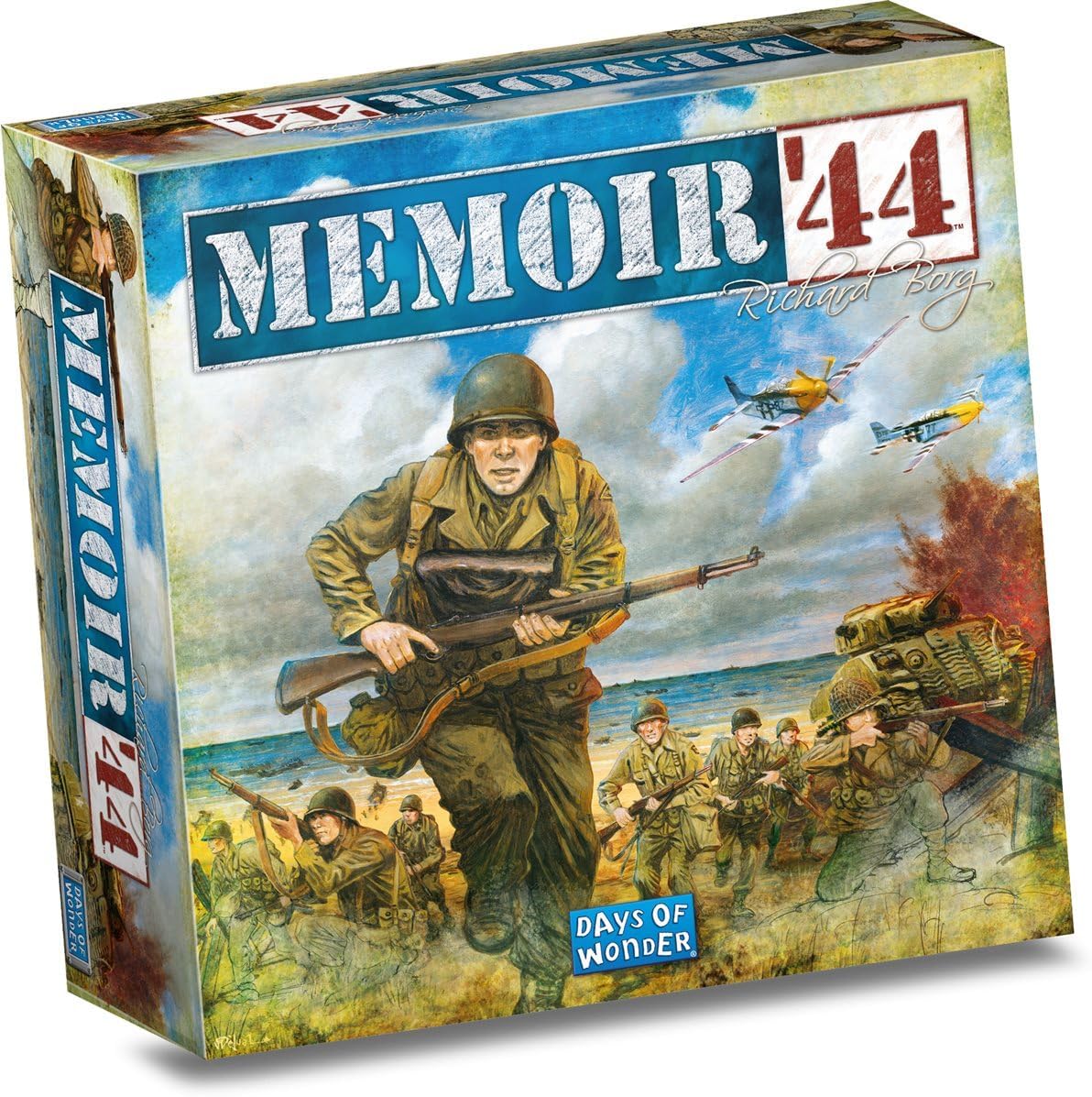
Head-to-head: Ticket to Ride vs Catan for grandparents with mild cognitive impairment
| Criterion | Ticket to Ride | Catan |
|---|---|---|
| Turn structure | One of three simple actions | Roll, collect, trade, build, play card |
| Average turn length | 20–60 seconds | 1–3 minutes (longer with trading) |
| Working-memory load | Low — cards are visible in hand | High — hidden hands, probabilities, trades |
| Rules length | ~2 pages | ~6 pages plus reference |
| Social pressure | Minimal — parallel play | High — active negotiation required |
| Hand-eye demand | Placing small plastic trains | Placing small wood pieces, rolling dice |
| Recovery from a missed turn | Easy — just draw or place | Hard — may miss resource production |
| Typical play time | 30–60 minutes | 60–90 minutes |
| Player count sweet spot | 2–3 (smaller = simpler) | 3–4 (2 needs variant rules) |
| Score visibility | Endgame reveal possible | Public running score |
Why Ticket to Ride lands easier for MCI players
The core reason is turn simplicity. On your turn you do exactly one of three things: take two train cards, claim a route by playing matching cards, or draw new destination tickets. There are no calculations, no negotiations, no hidden timer of "when will someone roll a 7 and steal my resources?" The board is also forgiving — every claimed route stays claimed, scores tick up on a clear track, and a player who zones out for a moment can re-orient instantly by looking at the colored cards in their hand.
Working memory is the cognitive domain hit earliest in mild cognitive impairment, and Ticket to Ride deliberately externalizes memory: your cards are in your hand, your destinations are face-down in front of you, your trains are on the board. Catan asks the player to remember which numbers benefit them, what they pledged to trade two turns ago, and what development cards they've already played. That's a heavier load than it looks.
Why Catan can still work — with modifications
If your grandparent loves Catan and wants to keep playing, several house rules dramatically lower the cognitive load:
- Open hands. Play with resource cards face-up. This removes hidden-information memory load and lets family members gently prompt.
- No robber. On a 7, simply re-roll. The robber's discard-and-steal mechanic causes the most frustration.
- Banker assist. A spouse or grandchild handles trades and resource collection on the grandparent's behalf, only asking yes/no questions.
- Shorter game. Play to 8 victory points instead of 10.
These changes preserve the social ritual without the turn-by-turn arithmetic. Still, for a brand-new purchase in 2026, Ticket to Ride is the safer bet.
Even gentler alternatives that fit in the same cabinet
Some days a 45-minute game is too much. That's when classic two-player games shine — short, familiar from childhood, and stored on a beautiful board that doubles as decor. Procedural memory (how to play checkers, how to drop stones in mancala) is one of the last things lost in cognitive decline, which makes these games unusually accessible. The three picks below are the ones we keep recommending for grandparents whose stamina or focus is shorter than it used to be.
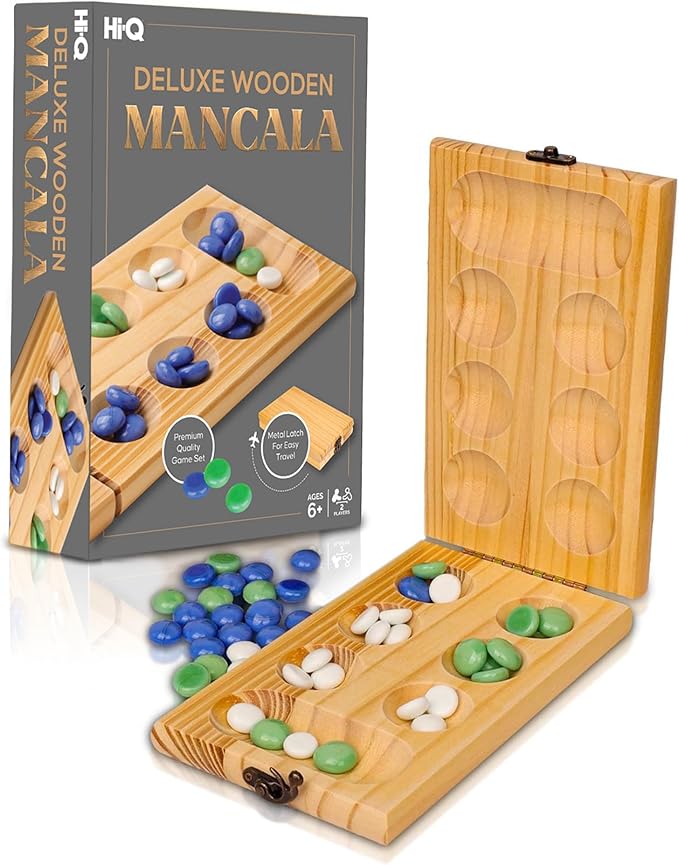
Best for a sweep-the-board ritual: Hi-Q Solid Wood Deluxe Mancala
Mancala is the single best game we recommend for grandparents with MCI. Turns are physical and tactile (you scoop stones and drop them one at a time), the rules fit on an index card, and the rhythmic motion is calming. The solid-wood Hi-Q board folds shut to store the stones inside, which means setup is essentially zero — unlatch, open, play. A full game runs 10–15 minutes, perfect for a post-dinner ritual that doesn't tax attention. The wooden board is also dignified-looking, which matters: nobody wants a plastic toy on the coffee table.
Check the Hi-Q Solid Wood Mancala on Amazon
Best heritage two-player game: Kangaroo Multiplayer Strategy Checkers
Checkers is procedural memory gold — most grandparents played as children and the rules surface automatically even when other things feel foggy. The Kangaroo set is sized generously, with high-contrast pieces that are easier to track than tournament-size checkers, and the multiplayer board variant lets a third or fourth person join when grandkids visit. Turns are short, the win condition is visible (count the pieces), and there's no reading required. Pair this with a weekly visit and you've built a ritual that exercises planning and pattern recognition without ever feeling like "therapy."
Check the Kangaroo Checkers set on Amazon

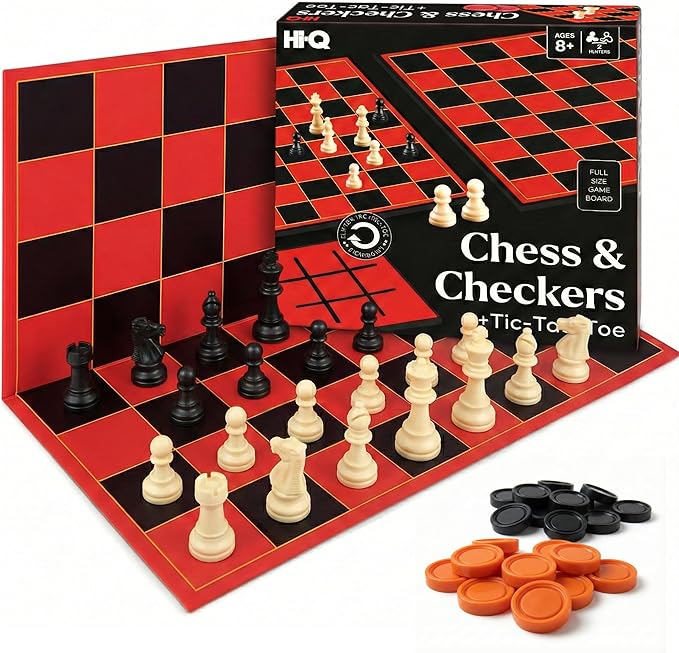
Best all-in-one cabinet pick: Hi-Q 3-in-1 Chess, Checkers & Tic-Tac-Toe Folding Set
If you want one box that flexes with the day's energy level, this 3-in-1 is the answer. Tic-tac-toe for a 2-minute warm-up, checkers for a 15-minute round, and chess for the days when your grandparent is sharp and wants the full challenge. The folding board stores all pieces inside, which removes the setup friction that often kills game nights for caregivers. We recommend leading with tic-tac-toe or checkers and only opening the chess option if it's already in your grandparent's repertoire — learning chess fresh with MCI is rarely a good idea.
Check the Hi-Q 3-in-1 set on Amazon
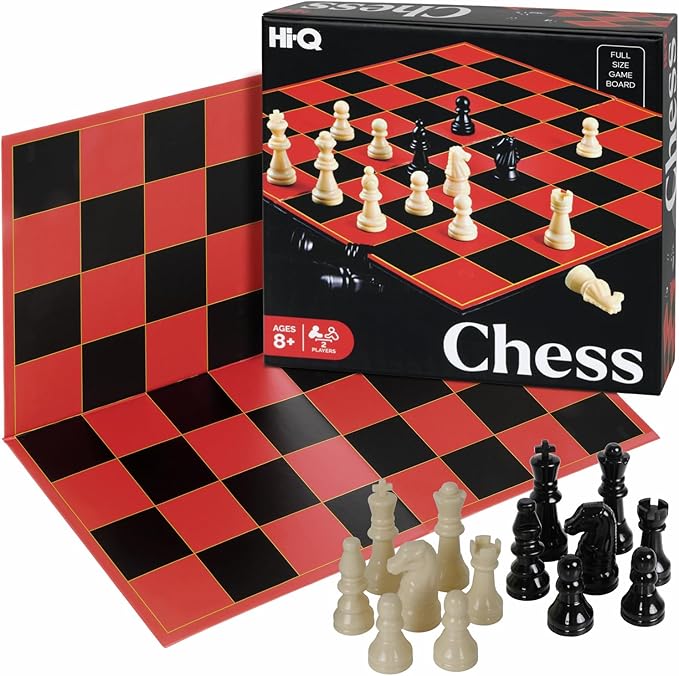
For sharper days that still love a classic: Hi-Q Classic Chess Set
If your grandparent has very mild symptoms and played chess seriously earlier in life, a dedicated chess board can be wonderful — procedural memory for the piece movements stays remarkably intact, and the structured turn-taking is calming. Skip this if chess is new to them; the learning curve is steep at any age and brutal with cognitive change. For lifelong players, though, a well-made chess set on the side table is an open invitation to a quiet, focused half-hour together.
Check the Hi-Q Classic Chess set on Amazon
How to set up game night so it actually works
The game choice is only half the battle. The other half is environment. A few rules of thumb from caregivers and occupational therapists:
- Reduce sensory load. Mute the TV, dim distracting overhead lights, keep the table clear of clutter. Cognitive impairment makes filtering background stimulation harder.
- Pre-set the board. Don't ask your grandparent to set up. Have it ready when they sit down.
- One rule explanation, not three. Re-teach the rules every session if needed, but teach them once per session, not every turn.
- Skip the score. For Ticket to Ride, you can keep destination tickets secret and only tally at the end — this removes the "I'm losing, why bother" spiral. For mancala and checkers, just play; the next game is in 10 minutes anyway.
- End on a win when possible. Not a fake win — just stop while the experience is positive. Two short games that feel good beat one long game that ends in frustration.
- Same time, same place. Routine helps anchor the activity. Sunday after lunch, Wednesday evening — whatever sticks.
For more setup ideas, our guide to dementia-friendly game night setup covers lighting, seating, and table size in detail.
What about cooperative games?
Cooperative games (everyone vs the board) are a strong category for MCI because they remove the competitive sting of losing and let family members openly help. Pandemic and Forbidden Island are the usual recommendations, but both are rule-heavy. For a grandparent new to modern board games, start with Ticket to Ride first — it's competitive but low-conflict — and graduate to co-ops only if the energy is there. Our cooperative board games for seniors roundup goes deeper.
Frequently Asked Questions
Is Ticket to Ride too complicated for someone with early dementia?
For early-stage dementia (beyond mild cognitive impairment), Ticket to Ride may still work but with modifications: play with destination tickets face-up, drop the long-route bonus, and let a partner help select which cards to draw. If even those modifications feel like too much, drop down to mancala or checkers. The base Ticket to Ride rules are simple enough for most MCI players, but dementia is a different threshold.
Are there easier versions of Ticket to Ride for seniors?
Yes. Ticket to Ride: First Journey uses a smaller US or Europe map, fewer cards, and a 15-minute play time. It's marketed for kids 6+, which can feel patronizing, but mechanically it's ideal for a senior who wants the Ticket to Ride feel in a third of the time. Ticket to Ride: New York is another good shorter option — 15 minutes, simpler scoring.

What's a good two-player board game for grandparents with memory issues?
Mancala and checkers are the strongest two-player picks because procedural memory of how to play them tends to persist well. Both have 10–15 minute games, minimal setup, and no reading. For a slightly more strategic option, Ticket to Ride supports two players with simple variant rules and works well one-on-one with a grandchild.
Can playing board games actually help slow cognitive decline?
The research as of 2026 suggests regular cognitively-engaging social activity is associated with slower decline, but no specific game has been proven to reverse MCI. The realistic frame: board games provide structured social time, light executive-function exercise, and a positive routine. Those are all good things. Don't oversell them as treatment, and pick games your grandparent actually enjoys — enjoyment drives repetition, repetition drives benefit.
Should I let my grandparent win?
No — but you can rebalance. Adults with MCI generally still detect when they've been handed a win, and it feels condescending. Better: pick games with high luck content (mancala has more than you'd think, Ticket to Ride has card-draw luck), play shorter games, and let the game itself produce a real distribution of wins and losses. If the gap is too wide, switch games rather than throw the match.
What if my grandparent forgets the rules mid-game?
Treat it as normal and re-explain calmly, every time, without sighing. Keep a single-sheet rules summary in large print next to the board so they can self-reference without asking. For Ticket to Ride, a sticky note saying "Take 2 cards • Claim a route • Draw 3 destinations" is enough. Forgetting is not a reason to stop playing; it's a reason to simplify the prompt.
Are digital versions of Ticket to Ride and Catan easier or harder for MCI players?
Generally harder. App versions add screen navigation, tap targets, and timing pressure that physical boards don't have. Tactile pieces and a real table beat tablets for almost every MCI player. The exception is if your grandparent already uses a tablet comfortably and the physical pieces have become hard to manipulate — then the app's larger visual feedback can help. Default to physical.
Key Takeaways
- Choosing the right ticket to ride vs catan for grandparents with mild cognitive impairment means matching capacity and output ports to your actual devices
- Always check actual watt-hours (Wh), not just watts — runtime depends on Wh, not peak output
- Also covers: ticket to ride or catan for memory loss
- Also covers: easier game for early dementia grandparents
- Also covers: catan vs ticket to ride for seniors
- Compare price-per-Wh across models to find the best value for your budget