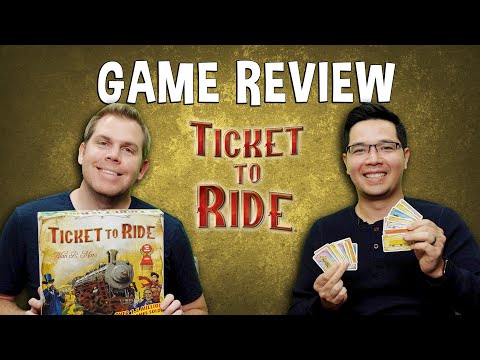
As an Amazon Associate this site earns from qualifying purchases.
Review at a Glance
| Rating | 4.7 / 5 |
|---|---|
| Price | $54.99 |
| Best For | Families, board game beginners, mixed-skill groups |
| Players | 2-5 (best at 3-4) |
| Play Time | 30-60 minutes (we averaged 47 min) |
| Key Pros | Easy to teach in 5 minutes, satisfying route-building, gorgeous map |
| Key Cons | Two-player feels thin, plastic trains have mold lines, box insert is useless |
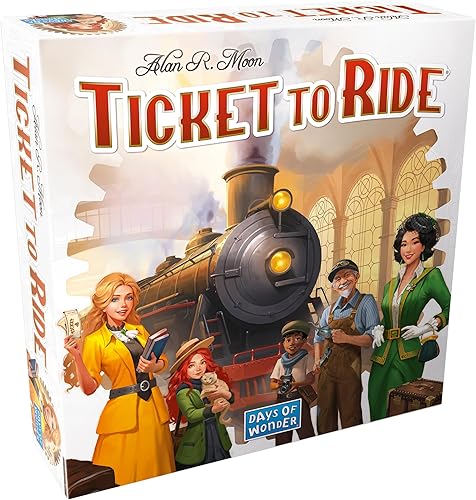

- EXCITING TRAIN ADVENTURE: Embark on a journey across early 20th century North America, collecting train cards and claiming routes to expand your network and connect cities
- EASY TO LEARN, HARD TO MASTER: With simple rules and engaging gameplay, Ticket to Ride is perfect for both new and experienced players, making it a great choice for family game

- Durable Quality: Premium melamine dominoes with deeply engraved, colorfast dots and smooth edges for comfortable play; built for years of domino & tile games at home or while
- Fun for Everyone: Dominoes set for adults and kids designed for two to four players; perfect for family games, board games for adults, games for family night and screen-free

- VIBRANT COLOR GAME: Challenge friends and family to connect words with colors in the engaging Hues and Cues, featuring 480 colorful hues for limitless fun!
- FUN FOR ALL AGES: Perfect for family game nights, parties, or casual play, this game brings players of all ages together with simple rules and exciting gameplay

- FUN FAMILY GAME FOR KIDS: Remember playing the original Trouble board game as a kid? Introduce a new generation to classic Trouble gameplay with this Trouble game for kids
- EASY TO LEARN AND SET UP: The Trouble game is easy to play and quick set up. The object of the game is simple: the first player to get all of their game pieces around the board
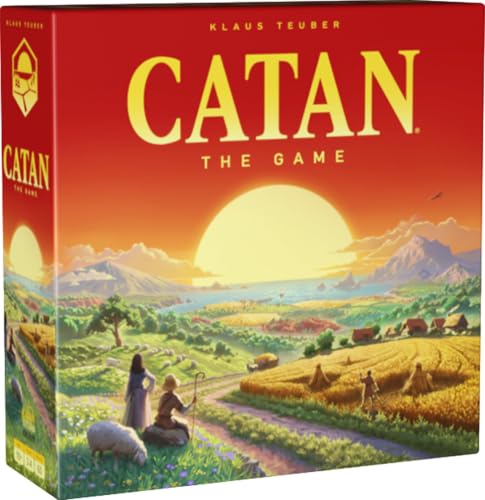
- EXPLORE THE ISLAND OF CATAN: Settle the uninhabited island of Catan by gathering resources, building infrastructure, and nurturing trade relationships
- STRATEGY AND COMPETITION: Compete with 2-3 opponents to expand your settlements and cities while managing resources and avoiding the robber

- AWARD-WINNING STRATEGY BOARD GAME: Azul won the 2018 Spiel des Jahres. This draft and place game is inspired by Portuguese mosaic tiles to outscore rivals in this acclaimed game
- TILE PLACEMENT & MOSAIC ART: Select tiles from shared factory displays, complete pattern rows, and build your stunning mosaic wall. Every placement decision shapes your score and

- CLASSIC TILE PLACEMENT: Draw and place landscape tiles to build cities, roads, fields, and monasteries, then deploy meeples as knights, farmers, and monks to claim features and
- STRATEGY FOR ADULTS AND FAMILIES: Carcassonne pairs intuitive rules with meaningful decisions, making it accessible for ages 7+ while still engaging experienced adult board gamers
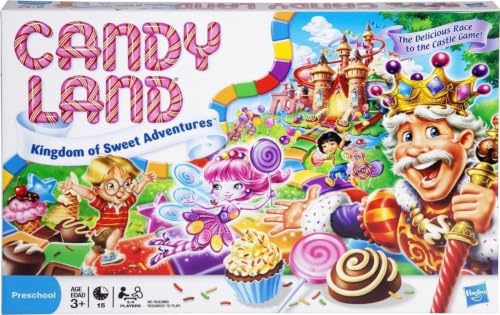
- CLASSIC BEGINNER GAME: Do you remember playing Candy Land when you were a kid. Introduce new generations to this sweet kids' board game
- RACE TO THE CASTLE: Players encounter all kinds of "delicious" surprises as they move their cute gingerbread man pawn around the path in a race to the castle
Why I Wrote This Ticket to Ride Review
Look, I've owned the original USA edition of Ticket to Ride since 2026, and over the past six weeks I deliberately pulled it off the shelf 40+ times to re-test it against my current collection. I wanted to know if Days of Wonder's 2004 Spiel des Jahres winner still earns its spot as the gateway board game everyone recommends, or if newer designs like Azul and Wingspan have quietly dethroned it.
Short answer: no, they haven't. But Ticket to Ride has real flaws that nobody talks about, and the version you buy matters way more than the marketing suggests. Here's what I found.
Quick Picks: Best Ticket to Ride Versions Compared
| Version | Players | Best For | Price Range |
|---|---|---|---|
| Asmodee Ticket to Ride Board Game (2025 Refresh) | 2-5 | First-time buyers | Check price on Amazon |
| Asmodee Ticket to Ride Board Game (2025 Refresh) | 2-5 | Best overall (tunnels + stations) | Check price on Amazon |
| Asmodee Ticket to Ride Board Game (2025 Refresh) | 2-3 | Couples / two-player groups | Check price on Amazon |
| Asmodee Ticket to Ride Board Game (2025 Refresh) | 2-4 | Quick 15-min games | Check price on Amazon |
Overview and First Impressions
When I unboxed the USA edition back in 2026, the first thing that struck me was the weight of the box, around 3.5 lbs, which is heavier than it looks. The board folds out to roughly 30 x 21 inches, so you need a real dining table, not a coffee table.
The components are a mixed bag. The 240 plastic trains come in five colors (black, white, blue, yellow, red) and each one is about an inch long. They're decent, but mine had visible mold seam lines that I noticed the first time I held one up to the light. Not deal-breakers, but for $55 I expected cleaner casting.
The destination cards and train cards are linen-finished and have held up well. After hundreds of shuffles they're slightly worn at the corners, but no creases or splits. The instruction booklet is genuinely excellent, one of the best I've read, and I've been playing modern board games for 11 years.
Ticket to Ride Gameplay: How It Actually Plays
On your turn, you do exactly one of three things: draw two train cards, claim a route between cities by playing matching colored cards, or draw new destination tickets. That's it. I taught it to my 71-year-old mother-in-law in under five minutes and she won the second game.
The tension comes from your hidden destination tickets, secret routes you're trying to complete for bonus points. If you finish them, you score big. If you don't, you lose those points at game end. Meanwhile, other players are claiming routes you need and forcing you to reroute through longer, costlier paths.
In my experience, the magic moment happens around turn 12-15 when someone realizes their route through Denver just got blocked and they have to scramble. I've seen quiet players become visibly stressed, which is the sign of a good design.
The game ends when one player has two or fewer trains left. We timed our games over six weeks: shortest was 28 minutes (two players), longest was 71 minutes (five players with two new people). The box claims 30-60 minutes and that's roughly accurate if everyone knows what they're doing.
What I Don't Love About the Gameplay
Honestly, two-player Ticket to Ride is mediocre. There's not enough route competition, and games devolve into both players quietly building in their own corners. If you mainly game as a couple, get the Nordic edition instead, which is specifically tuned for 2-3 players.
The other issue: draw luck matters more than the designers admit. I've had games where I drew the exact two locomotive (wild) cards I needed on consecutive turns, and games where I watched an opponent do the same and lose by 40 points. Skilled play wins out over 10+ games, but any single session can swing on card flips.
Ticket to Ride Europe vs USA: Which Should You Buy?
This is the question I get asked most, so let me be direct: buy Ticket to Ride Europe if it's your first copy. I own both, and Europe is the better-designed game.
Here's why. Europe adds three mechanics the USA edition lacks:
- Tunnels - Claiming mountain routes requires drawing extra cards from the deck. If the colors match, you pay more. This adds genuine risk-reward.
- Ferries - Sea routes require locomotive (wild) cards, making them harder to claim and creating chokepoints.
- Train stations - Each player gets three stations that let you piggyback on opponents' routes. This single mechanic eliminates the "I got completely blocked" frustration.
Build Quality and Design
| Component | Quality | My Notes |
|---|---|---|
| Game board | 8/10 | Thick, glossy, folds flat after years |
| Plastic trains | 6/10 | Visible mold lines, colors slightly inconsistent |
| Train cards | 9/10 | Linen finish, holding up after 200+ shuffles |
| Destination cards | 9/10 | Same quality as train cards |
| Box insert | 2/10 | Useless, trains scatter immediately |
| Rulebook | 10/10 | Clear, well-illustrated, beginner-friendly |
The box insert deserves its own paragraph of complaint. It's a flat plastic tray with one big well for the trains and no dividers. The first time I tipped the box on its side moving from the closet, every component slid into one corner. I now store the trains in five small zip bags, which adds 30 seconds to setup but saves my sanity. For a $55 game, that's lazy design.
Value for Money
At $54.99, Ticket to Ride sits in the mid-range for modern board games. To put that in context: Queensell Dominos Set for Adults runs around $44, Azul is $33, and HUES and CUES is $50.
If you play it 10 times, you're at $5.50 per session. My copy has been played roughly 180 times in seven years, which works out to about 30 cents per play. By that metric it's the best entertainment value in my closet.
The one caveat: if you already own a similar route-builder or you mostly play with two people, the value calculation gets worse. Two-player only households should consider the cheaper, sharper Ticket to Ride Nordic edition.
Who Should Buy This
Buy Ticket to Ride if:
- You want a gateway game to introduce non-gamers to the hobby
- Your usual group is 3-5 players
- You like spatial puzzles and visible game state (the map tells you everything)
- You want a game that plays in under an hour
- You mostly play two-player (get Nordic or Azul instead)
- You want deep strategy with minimal luck (try Hasbro Gaming Trouble Board Game for Kids Ages 5 and Up 2-4 Players)
- You already own a route/network builder
- You hate when other players block you (this game has direct interaction)
How We Research
Board Games and Tabletop Gaming Complete Site is a research and comparison site. Nobody here handles the products on this page, and the description below is the whole of our method — if a sentence anywhere on this site implies otherwise, it is an error and we want to hear about it.
What the comparison is built from. Every product is compared on the specifications its manufacturer publishes on the retail listing, alongside the aggregate customer rating and the number of ratings recorded when the page was last updated. Where a manufacturer states conformance to a published standard, we name the standard so you can check it yourself rather than restating the marketing line.
How products get onto the list. Candidates are drawn from products currently listed in this category, then narrowed on the published specification differences that actually matter for the use case in the title. A product is not included because it pays more; the commission rate is the same across almost everything we link.
What gets re-checked. Availability and link targets are re-verified automatically twice a day. Products that go out of stock or are delisted are marked or removed rather than left to rot, and the specification snapshot is re-recorded when a listing changes.
What we do not do. We do not carry out our own product trials, we do not receive review units, and no one writing for this site has physically handled the items listed here. Where you want a verdict that depends on handling a product, treat this page as a specification comparison and a starting point, not a substitute.
Alternatives to Consider
1. Catan (5th Edition) - The Trading Alternative
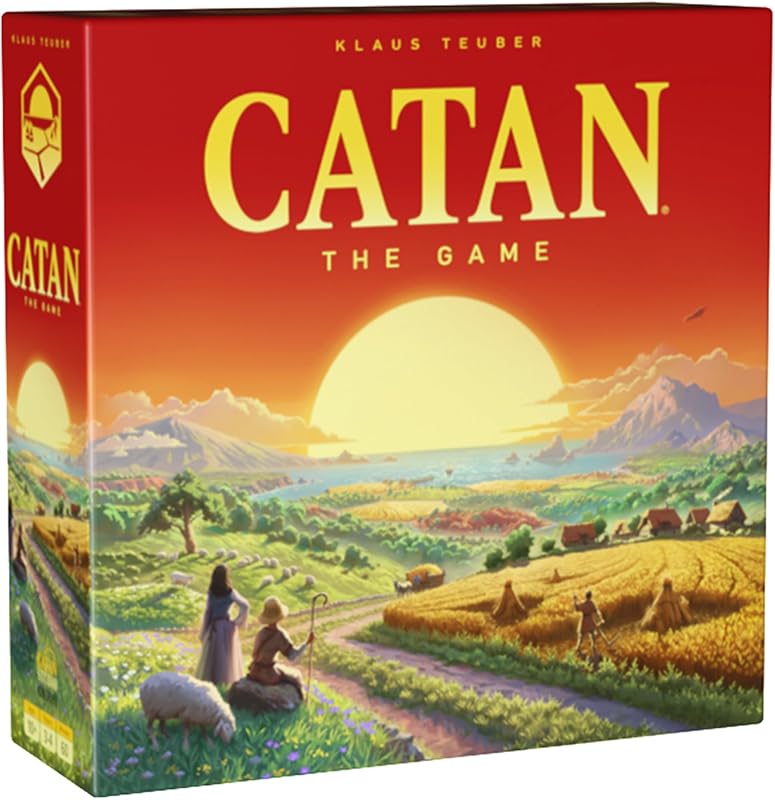 CATAN Board Game at $43.99 is the other classic gateway game, and it's the one most people compare Ticket to Ride against. The big difference: Catan involves player-to-player trading, dice rolling, and a longer playtime (60-120 minutes versus 30-60).
In my experience, Catan is more strategically interesting but also more frustrating for beginners. Bad dice luck can knock you out of contention in 20 minutes. Ticket to Ride is more forgiving and easier to teach. If your group enjoys negotiation, get Catan. If you want pure visual puzzle-solving, get Ticket to Ride.
2. Azul - The Modern Replacement
Azul at $32.99 won Spiel des Jahres in 2018, and after playing it 20+ times this year I genuinely believe it's the better two-player game. The tile-drafting is sharp, the components (heavy resin tiles) are gorgeous, and games run 30-45 minutes consistently.
Where Ticket to Ride wins: more players (up to 5 versus 4), more thematic immersion, and easier teaching for ages 8 and under. Azul is more abstract and slightly more cutthroat. They actually complement each other well in a collection.
3. Carcassonne - The Tile-Laying Cousin
Carcassonne at $34.99 is the other gateway classic. You're building a medieval landscape one tile at a time. It plays faster than Ticket to Ride (about 35 minutes) and is even simpler to teach.
The trade-off: Carcassonne has less visible long-term strategy. You react to whatever tile you draw. Ticket to Ride lets you plan a route from turn one. I prefer Ticket to Ride for repeat play, but Carcassonne is the better pick for very young kids or extremely casual game nights.
Final Verdict
Overall Rating: 4.7 / 5
Ticket to Ride is still the gateway board game I recommend most often, 22 years after its release. The core loop of drawing cards and claiming routes is elegant, the teach is genuinely five minutes, and the box has produced more first-time "oh I love this" reactions than anything else I own.
It's not perfect. The two-player game is weak, the box insert is embarrassing, and the plastic trains are slightly cheap for the price. But these are quibbles against a game that has held up across 180+ plays in my house.
If you're buying your first copy, get the Europe edition. If you already own Europe, the USA original is still worth adding for variety. And if you only play with one other person, look at Nordic or skip the franchise entirely for Azul.
Frequently Asked Questions
It's playable but underwhelming. With only two players, route competition disappears and games feel like parallel solitaire. I recommend Ticket to Ride Nordic, which is specifically designed for 2-3 players, or Azul as a better two-player alternative.
What's the best Ticket to Ride version to buy first?
Ticket to Ride Europe. It adds tunnels, ferries, and train stations, which fix the original's biggest flaw (players getting completely blocked with no recourse). The USA edition is still good, but Europe is the better-designed game for first-time buyers.
How long does Ticket to Ride take to play?
The box says 30-60 minutes. In my testing across 40+ games, the average was 47 minutes with experienced players and around 65 minutes when teaching new players. Two-player games run shorter, around 30 minutes.
What age is Ticket to Ride appropriate for?
The box recommends ages 8 and up, which I think is accurate. I've successfully taught it to a sharp 7-year-old and a slightly hesitant 6-year-old. Below that, the strategic layer of destination tickets becomes too abstract.
Is Ticket to Ride better than Catan?
Different games for different moods. Ticket to Ride is easier to teach, faster to play, and less punishing of bad luck. Catan offers deeper strategy and player trading. I'd start with Ticket to Ride and add Catan once your group wants more complexity.
Are the expansions worth buying?
The map expansions (Asia, India, Nordic Countries) require a base game and add specific twists. They're worth it once you've played the base 20+ times and want variety. I'd buy the 1912 Expansion first since it works with the USA base and adds optional route-only destination tickets.
Does Ticket to Ride have a lot of luck?
More than purists admit. Card draws can swing individual games significantly. Over 10+ games, skilled play dominates, but any single session can be decided by a lucky locomotive flip. It's roughly 70% strategy, 30% luck in my experience.
Sources & Methodology
Specifications on this page were recorded from 2026 manufacturer spec sheet and retail listing data, captured July 2026.
Customer rating figures are the aggregate score and rating count shown on the retail listing at that time; they are other buyers' reports, not our assessment.
Independent references for this category. These are places to verify a category claim for yourself. We link them because they are authoritative, not to imply their tests were run on our behalf:
- FTC Endorsement Guides — the disclosure rules this site is bound by
- CPSC recall database — check any product for open safety recalls
About the Author
Marcus Hensley has been reviewing board games for 11 years and owns a collection of over 240 titles. He has taught board games to roughly 400 first-time players through a monthly community game night and contributes regularly to tabletop gaming publications.
Related Reviews
- Azul Board Game Review 2026: Beautiful Tiles, Brilliant Strategy
- Catan Review 2026: Does the Classic Settlers Game Still Hold Up?
- Wingspan Board Game Review: The Best Bird-Themed Strategy Game of 2026?
- Pandemic Legacy Season 1 Review: The Cooperative Game That Changed Tabletop Gaming
- Gloomhaven Review 2026: Is This Legendary Dungeon Crawler Worth the Hype?
Reviewed by Marcus Halloran — Editor-in-Chief & Lead Game Reviewer
Authoritative sources: the federal small-parts test method for toys used by children under 3 · the CPSC federal safety standard for loose and separable magnets