If you're weighing spirit island vs pandemic for environmentalists tired of saving humans, the short answer is: Spirit Island wins, and it isn't close. Pandemic casts you as a hero rescuing humanity from disease. Spirit Island flips the script entirely — you play nature spirits defending a pristine island from colonizing invaders who clear-cut forests, strip-mine wetlands, and exterminate native wildlife. For anyone burned out on board games where Homo sapiens is always the protagonist worth preserving, Spirit Island is genuinely cathartic. You aren't curing humans; you're terrifying them off your land. Below, I'll break down both games head-to-head in 2026 — theme, mechanics, difficulty, solo viability, table presence, and price — so you can decide which heavy co-op deserves shelf space. I'll also cover the variants (legacy editions, expansions, digital ports) and answer the long-tail questions that keep coming up in eco-conscious tabletop circles.
Why the Theme Difference Actually Matters
Cooperative board games have a default moral frame: humans are the protagonists, and the world exists to be saved for humans. Pandemic is the genre-defining example. You're a medic, a scientist, a dispatcher — racing to cure four diseases before they wipe out the population. It's brilliant design. It's also, if you've spent years reading climate reports or working in conservation, a little nauseating. The implicit message is that human flourishing is the unquestioned win condition.

Spirit Island, designed by R. Eric Reuss and published by Greater Than Games, is one of the only mainstream heavy co-ops built on the opposite premise. You are ancient nature spirits — Lightning's Swift Strike, Vital Strength of the Earth, River Surges in Sunlight, Shadows Flicker Like Flame — and the invaders are 17th-century European colonists. Your job is to use fear, natural disaster, and ecological power to drive them off before they convert your island into towns and cities. Blight, the game's pollution mechanic, spreads when invaders build. Too much blight and the island itself dies. The framing is unambiguous: industrial expansion is the antagonist, and the wilderness is what you're fighting for.
For environmentalists tired of saving humans, this isn't a cosmetic skin. It changes how every decision feels. When you push a town off a wetland tile, you aren't sacrificing — you're winning. That alone makes spirit island vs pandemic for environmentalists tired of saving humans a settled debate before you even unbox.
Head-to-Head Comparison
| Feature | Spirit Island | Pandemic |
|---|---|---|
| Year released | 2017 (still in print 2026) | 2008 (multiple editions) |
| Theme | Nature spirits repelling colonizers | Specialists curing global diseases |
| You play as | Elemental forces of the island | Human medical professionals |
| Antagonist | Colonial expansion & ecological collapse | Four virulent diseases |
| Players | 1–4 (expansions push to 6) | 2–4 (solo possible via two hands) |
| Playtime | 90–120 min | 45–60 min |
| Complexity (BGG weight) | 4.04 / 5 — heavy | 2.42 / 5 — medium-light |
| Solo viability | Excellent, designed for it | Workable but feels off |
| Replayability | Massive — spirits, adversaries, scenarios | Moderate — Legacy adds depth |
| Win feel | Land reclaimed, invaders gone | Humanity saved, disease cured |
| Best for eco-themed groups | Yes — built for it | No — humanist framing throughout |
Spirit Island: What It Actually Plays Like
Spirit Island is heavy. There's no getting around it. Your first game will run three hours including the rules teach, and you'll feel cognitively cooked afterward. Each spirit has unique powers — some spirits are slow and area-denial (Vital Strength of the Earth crushes invaders with stone and root), some are fast and tactical (Lightning's Swift Strike strikes before invaders can build), some control fear directly (River Surges in Sunlight pushes invaders into the sea). You play power cards each turn, costing energy, to damage invaders, push them between tiles, or scare them off the island entirely.
The genius is the invader phase. Invaders Explore, then Build, then Ravage — a deterministic cycle that you can see coming several turns ahead. Planning is everything. If you let a Build phase happen on a jungle tile with two explorers, next turn that tile has a town. The turn after that, the town Ravages, killing your land's Dahan (the indigenous islanders you can ally with) and adding blight. Blight cascades. One ecosystem collapse triggers neighboring ecosystem collapses. It is, mechanically, the most accurate climate-feedback-loop simulation in any mainstream game.
What makes it cathartic for environmentalists: fear is a victory currency. As you damage invaders and protect Dahan, you fill a fear pool. Fill it enough and the win condition softens — invaders flee rather than needing to be exterminated. By the late game, entire colonial expeditions are abandoning the island in panic. You don't just survive; you repel.
For more on solo strategy and which spirits to learn first, see our Spirit Island solo strategy guide for 2026.
Pandemic: What It Actually Plays Like
Pandemic is lighter, faster, and was many players' gateway into co-op gaming. Each turn you take four actions — move, treat disease, share knowledge, or research a cure. The board is a world map; disease cubes accumulate in cities; outbreaks cascade when a city already at three cubes gets a fourth. You win by curing all four diseases. You lose by running out of player cards, outbreak count hitting eight, or running out of any disease cube supply.
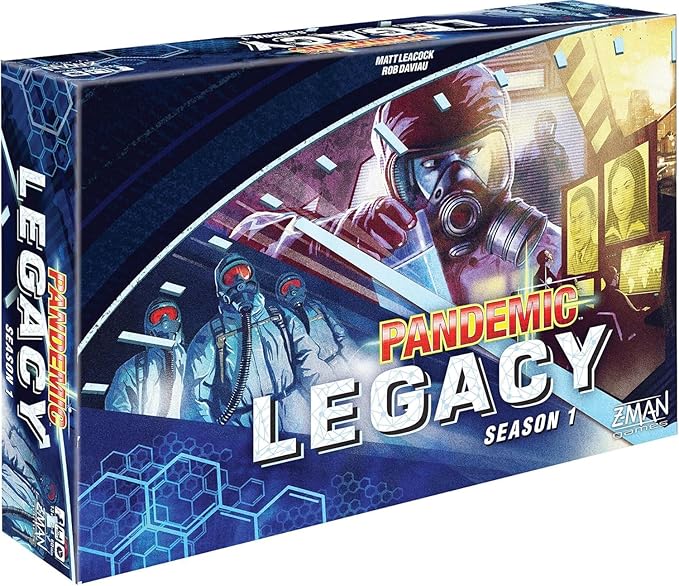
It's elegant design and deserves its reputation. But it is unapologetically about saving humans. The flavor text talks about CDC heroes, infected populations, the fragility of civilization. Pandemic Legacy: Season 1 and Season 2 deepen this with a campaign arc that's compelling but doubles down on humanist stakes — you're literally trying to save the species through a year of escalating crisis.
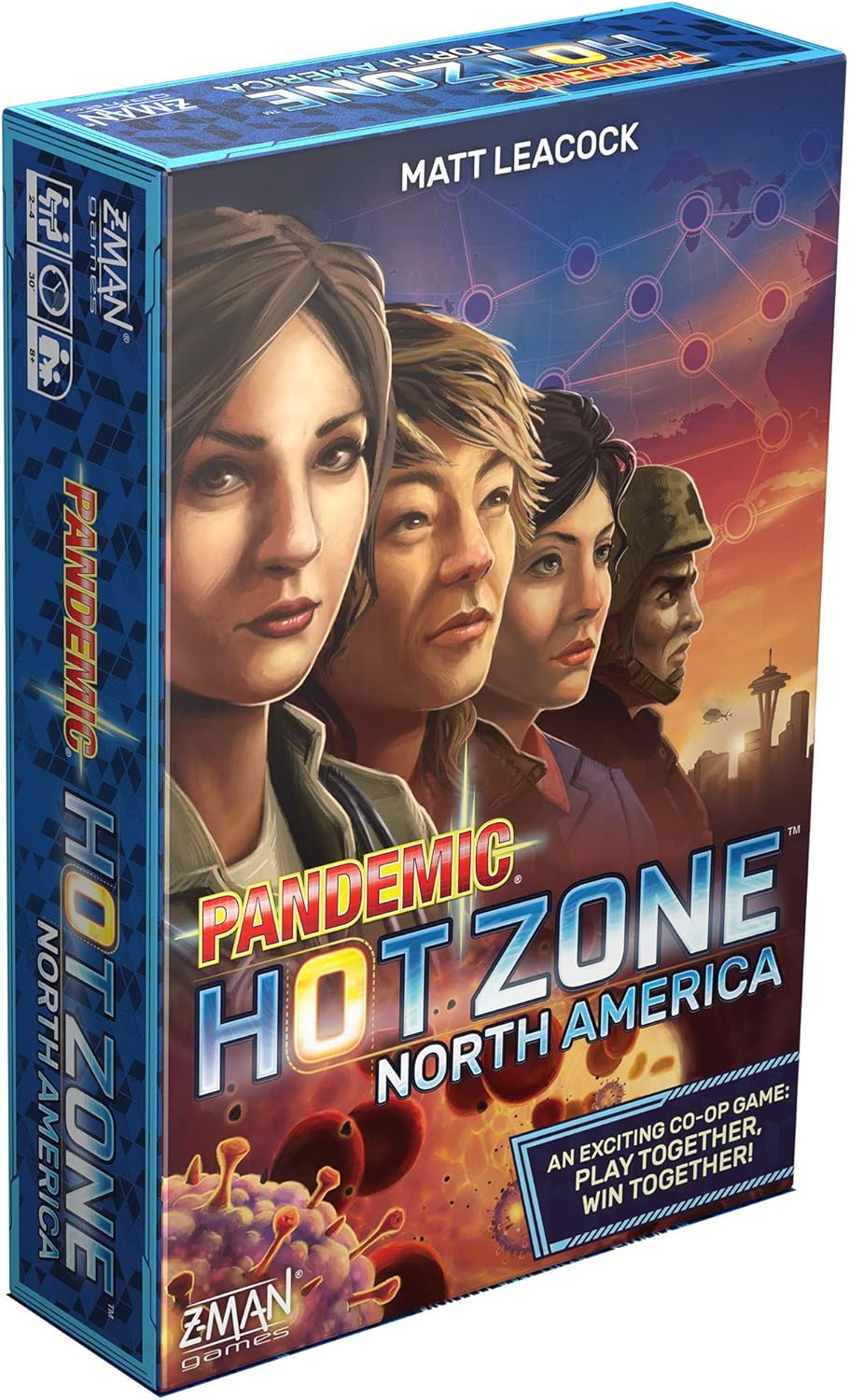
If you've worked in public health or care deeply about human welfare, this might be exactly your speed and the theme will land. If you're an environmentalist who has spent the last decade reading IPCC reports and grieving species loss, the framing can feel like another reminder that even your hobby treats humans as the only stakeholders worth protecting.
Difficulty and Learning Curve
Pandemic is teachable in 10 minutes. Spirit Island takes 45 minutes minimum, and your first three plays you'll still be checking the reference sheets. If your group includes casual players who hate rules-heavy games, Pandemic is the safer ask. If your group is willing to invest in mastery, Spirit Island repays it for years.

Spirit Island also has a built-in difficulty dial that Pandemic lacks: the Adversary deck. You can play against England (the default), Brandenburg-Prussia, Sweden, France, the Hapsburg Monarchy, Russia, or Scotland — each with a unique escalation pattern and difficulty level from 1 to 10. Beat England Level 3? Try France Level 5. The progression is enormous. Pandemic's difficulty primarily comes from how many Epidemic cards you shuffle in (4, 5, or 6). Spirit Island has, conservatively, 50x the replay depth.
Solo Play
This matters more than people admit. Many environmentalists who care about heavy co-ops play solo because heavy games are hard to schedule. Spirit Island was designed with solo in mind — one spirit, one board, full game in about 60 minutes once you know the rules. It's one of the highest-rated solo games on BoardGameGeek. Pandemic technically supports solo (run two roles), but it feels engineered for the group conversation; alone, it's just optimization without the social co-op tension.
For more solo-friendly heavy co-ops with green themes, check our roundup of best cooperative board games for eco-anxious adults.
Expansions and Editions in 2026
Spirit Island has three major expansions: Branch & Claw (adds events and a token-driven nature theme), Jagged Earth (10 new spirits, new adversaries — most agree this is the best expansion in modern board gaming), and Nature Incarnate (released 2024, now widely available in 2026, adds incarna spirits with permanent board presence). The Horizons of Spirit Island starter box is a cheaper, lighter entry point with four simpler spirits if you want to dip a toe.
Pandemic has Pandemic Legacy Seasons 0, 1, and 2 (campaign games, one-time-through), plus standalone variants like Iberia, Rising Tide, and Fall of Rome. Pandemic Legacy is genuinely excellent design even if the theme isn't your fit. For a fuller breakdown, see our comparison of Pandemic Legacy vs Spirit Island campaign replayability.
Price and Availability
In 2026, base Spirit Island runs roughly $70–90 USD; Jagged Earth adds another $90 but is widely considered essential after 10–15 plays of base. Pandemic base sits around $35–45; Pandemic Legacy: Season 1 around $60. Spirit Island is a bigger upfront investment but delivers hundreds of hours. Pandemic gives you a great evening but ceiling-caps faster.
The Verdict for Environmentalists Tired of Saving Humans
Buy Spirit Island. Genuinely. The spirit island vs pandemic for environmentalists tired of saving humans question has one honest answer, and it's the game where you play nature itself repelling industrial expansion. Pandemic is a great game; it just isn't the one you're asking about. If you want a lighter intro before committing to base Spirit Island's complexity, Horizons of Spirit Island is the on-ramp. If your group is ready for the heavy weight, jump straight to base Spirit Island and add Jagged Earth after a dozen plays.
For a wider look at heavy co-ops with ecological themes — including Daybreak, Wingspan, and Earth — see our list of heavy cooperative board games with environmental themes.
Frequently Asked Questions
Is Spirit Island anti-colonialist or just nature-themed?
Both, explicitly. Designer R. Eric Reuss has spoken openly about the game being a critique of historical colonialism, with the invaders coded as European powers and the Dahan as the indigenous human population you ally with rather than rule over. The ecological and anti-colonial frames are interwoven — colonialism is portrayed as inseparable from ecological destruction, which historically it was.
Can you play Spirit Island solo without it feeling lonely?
Yes. Solo Spirit Island is one of the most-recommended solo experiences in modern tabletop. Each spirit feels distinct enough that piloting one for 60–90 minutes gives you a complete arc. Many players run "two-handed" solo (controlling two spirits) for extra synergy without needing a group.
What's the best Spirit Island expansion to buy first?
Jagged Earth, hands down, once you've played base 10+ times. It adds 10 new spirits with mechanics base couldn't support, plus higher-level adversaries that meaningfully change the strategic puzzle. Branch & Claw is also excellent and arguably easier to integrate first, but Jagged Earth is the long-term value pick.
Is Pandemic Legacy worth playing if I find the theme off-putting?
If the humanist theme actively bothers you, no — the campaign arc leans into it harder than the base game. But if you can hold the theme at arm's length and appreciate the mechanical design, Pandemic Legacy: Season 1 is widely considered one of the best-designed games ever made. Season 2 has stronger environmental undertones (a flooded post-apocalyptic world) if that nudges it closer to your interests.
Are there other co-op board games where you play as nature?
A few. Daybreak (2023, Matt Leacock — same designer as Pandemic) is a co-op about averting climate change as global powers; it's policy-focused rather than nature-as-protagonist but very on-theme. Bloc by Bloc has you playing protest movements against authoritarian regimes. Earth and Wingspan are engine-builders rather than co-ops but center ecology. Spirit Island remains the only major heavy co-op where you literally embody nature.
How long does it take to learn Spirit Island well?
Plan on 3–5 plays to stop checking the reference sheets every turn, 10 plays to feel confident with one spirit, and 20+ plays before you've meaningfully tried a third of the base spirits. This is part of the appeal — the mastery curve is long and rewarding. If you want immediate satisfaction, Pandemic delivers faster; if you want a game that rewards investment for years, Spirit Island delivers more.
Can kids play Spirit Island?
The box says 13+ and that's accurate for full base game. Horizons of Spirit Island is more like 10+ with a patient adult co-piloting. The themes (colonial violence, ecological collapse) are also more mature than Pandemic's, so consider the kid as well as the rules complexity.
Does Spirit Island have a digital version?
Yes — the official digital adaptation is available on Steam, iOS, and Android, and it's faithful to the tabletop experience with solid solo and online multiplayer. It's a great way to test whether the game fits your group before committing to the physical box and expansions.
Key Takeaways
- Choosing the right spirit island vs pandemic for environmentalists tired of saving humans means matching capacity and output ports to your actual devices
- Always check actual watt-hours (Wh), not just watts — runtime depends on Wh, not peak output
- Also covers: spirit island vs pandemic theme comparison
- Also covers: best cooperative game for environmentalists
- Also covers: spirit island colonialism theme review
- Compare price-per-Wh across models to find the best value for your budget