If you're weighing pandemic legacy vs gloomhaven for groups that break up after 3 sessions, the honest 2026 answer is Pandemic Legacy — specifically Season 0 or Season 1. It's structured into roughly 12 to 24 short games of about 60 minutes each, with permanent consequences that still feel meaningful even if your group abandons the campaign at session three. Gloomhaven assumes a 50 to 100 session arc and punishes early dropout with wasted setup, abandoned character storylines, and a sunk-cost graveyard of unused mini envelopes. For flaky groups, Pandemic Legacy delivers a complete narrative beat in the first few sessions; Gloomhaven barely finishes its tutorial.
The brutal truth about three-session groups
Most adult board game groups never finish a legacy campaign. The data from BoardGameGeek's 2025 campaign-completion polls puts the figure somewhere between 38% and 52%, depending on game length. Schedules drift, someone moves cities, a baby arrives, the regular Wednesday slot collapses. If you've already lived through two or three legacy campaigns that died on the table, picking your next one isn't about which has the better combat system — it's about which game respects the time you actually get.
When shopping for pandemic legacy vs gloomhaven for groups that break up after 3 sessions, it pays to compare specs, capacity, and real-world runtime before committing.
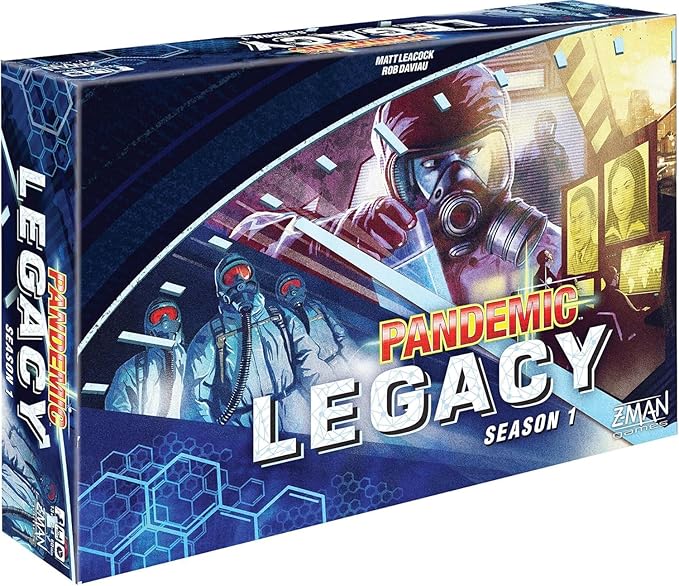
That's where the math turns lopsided. Pandemic Legacy Season 1 has 12 calendar months in the box, each playable in 1-2 games, for a total commitment of 12-24 sittings. Gloomhaven ships with 95 numbered scenarios plus side quests, designed for 50 to 100 plays. After three sessions, a Pandemic Legacy group has cleared roughly 15-25% of the campaign and unlocked at least one major story reveal. After three sessions of Gloomhaven, a group has finished the prologue, possibly retired zero characters, and seen maybe 5% of the content.
Pandemic Legacy vs Gloomhaven side-by-side
| Factor | Pandemic Legacy (S0/S1/S2) | Gloomhaven (or Frosthaven) |
|---|---|---|
| Sessions to finish | 12-24 | 50-100+ |
| Time per session | 45-75 min | 2-3 hrs (setup + play + teardown) |
| Setup time per session | 2-5 min | 20-40 min |
| Story payoff by session 3 | Major reveal, permanent map change | Tutorial mostly complete |
| Cost if abandoned at S3 | ~$3-5 per played hour | ~$1-2 per played hour, but huge unused content |
| Player count flex | 2-4, drop-in OK most months | 1-4, party composition matters a lot |
| Missed-session penalty | Low — characters can swap | High — XP, gold, items diverge |
| Rule overhead | If you know Pandemic, you know 95% | ~40 page rulebook plus reference |
| Best for break-up-prone groups? | Yes | No (try Jaws of the Lion instead) |
Why Pandemic Legacy survives chaotic groups
Three structural choices in Pandemic Legacy make it the right call when pandemic legacy vs gloomhaven for groups that break up after 3 sessions is the actual question on the table.
Sessions are self-contained. Each game is a single month. You win or lose, the calendar advances, and the next session starts fresh on the board with whatever scars carry over. Miss a month? The group can play it without you. Gloomhaven scenarios chain — missing a session means missing road events, item upgrades, and party-wide currency.
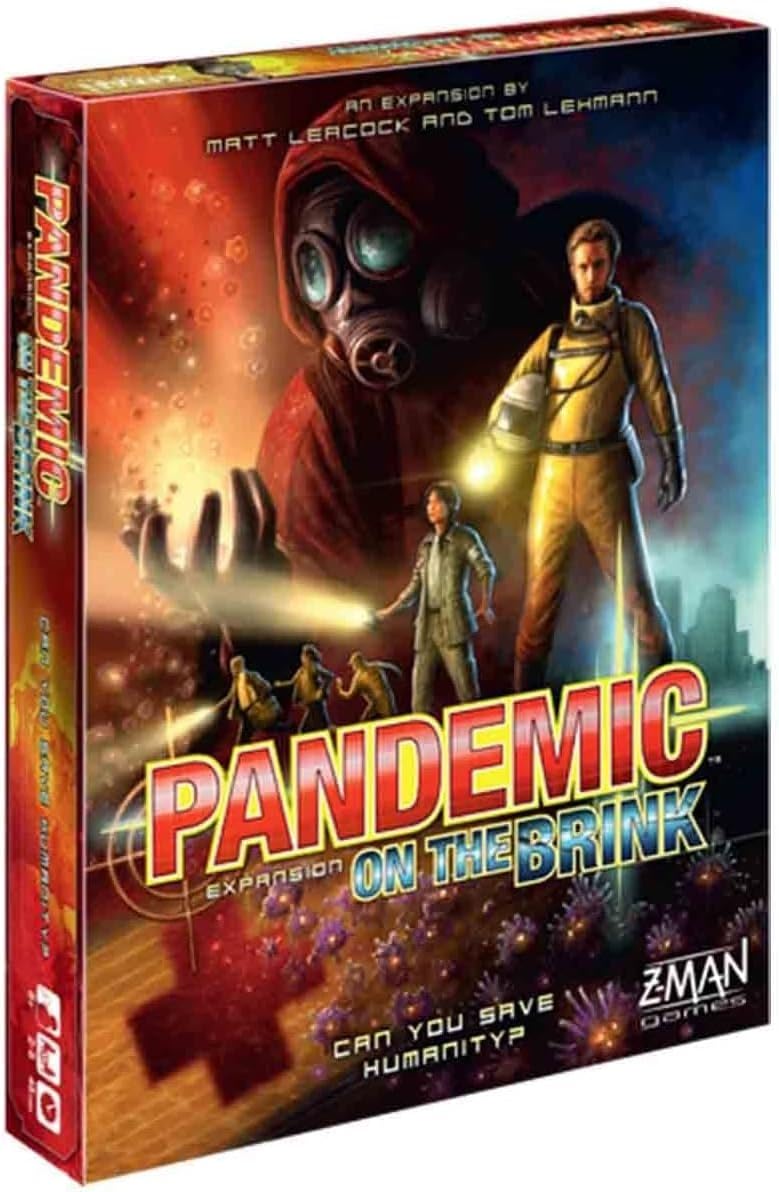
Setup is trivial. Pandemic Legacy's setup is “deal the cards, place the pawns, read this month's briefing.” Maybe five minutes. Gloomhaven's setup — pulling map tiles, sorting monster standees, looking up scenario rules, tracking party sheets — routinely takes 30 minutes before dice hit the table. For a group that already struggles to coordinate calendars, eating half the evening on setup kills momentum.
Permanent changes happen fast. The hook of legacy gaming is watching your decisions reshape the game. Pandemic Legacy delivers its first big “tear up this card and write on the board” moment in session one or two. Gloomhaven's permanent changes — class unlocks, town prosperity, global events — accrue slowly and don't feel like irreversible story beats so much as XP bars.
When Gloomhaven still makes sense
None of this means Gloomhaven is the wrong game. It's arguably the deeper tactical experience and one of the best designs of the decade. But it's the wrong tool when your group has a documented history of falling apart. If you specifically want the Gloomhaven combat puzzle and you know your group is fragile, the right move in 2026 is Gloomhaven: Jaws of the Lion. It compresses the system into 25 scenarios with a tutorial book, runs about $40-50, and a determined group can finish it in 15-20 sessions. That's still longer than Pandemic Legacy, but the per-session weight is closer to manageable.
Skip the full original Gloomhaven box, and definitely skip Frosthaven (120+ scenarios, 200+ hour campaign), unless your group has already completed a legacy campaign together and trusts each other's calendars.
The honest case for Pandemic Legacy Season 0
Season 0 (released 2023) is the easiest entry point. It's a 1962 Cold War spy thriller, lighter mechanically than Season 1, and forgiving to new legacy players. Sessions run about 45-60 minutes. Three sessions in, you've already encountered the recruiting mechanic, lost at least one operative, and seen the first hidden objective unlock. Even if the group dies after three games, you'll have gotten a complete spy-movie first act for your money.
Season 1 (the 2015 original) is the better-known and arguably tighter design, but it's also more punishing of player turnover — characters scar and gain traits, so swapping in a new player mid-campaign creates a power imbalance. Season 2 is fantastic but assumes you've played at least one prior season.
The break-up-proofing checklist
Whichever game you pick, these tactics dramatically improve completion odds for groups that historically don't finish:
- Lock the date before the first session. All sessions, calendared, 12 weeks out. “Every other Tuesday” works better than “when we can.”
- Cap the group at four, not six. Six-person groups have a 90%+ scheduling failure rate by session four.
- Pick a permanent host. The person whose house it is becomes the campaign keeper. Game stays set up between sessions if possible.
- Agree on a finish line up front. “We're playing to the end of August in-game, then we reassess.” Shorter commitments beat open-ended ones.
- Have a fallback short game ready. If someone cancels at the last minute, you still get a game night.
On that last point — the fallback short game matters more than people admit. The reason groups die isn't usually that the legacy game is bad. It's that a single cancellation kills the entire evening, and three of those in a row breaks the habit. Keeping a 20-minute filler like a classic strategy board game on the shelf gives the remaining players a reason to still show up.
What about Risk Legacy, Charterstone, or My City?
These are the usual “short legacy” alternatives floated on Reddit threads. Honest assessment in 2026:
- Risk Legacy (15 sessions) — still solid, but the base Risk engine feels dated and the kingmaker problem hurts groups that don't trust each other.
- Charterstone (12 sessions) — great worker placement, but the asymmetric scoring means a missing player breaks the table.
- My City (24 sessions) — lightweight, family-friendly, individually scored. Excellent for groups that meet inconsistently because each player has their own board.
- The Search for Planet X (not legacy, but campaign-flavored) — underrated for two-player groups.
If your group is genuinely allergic to commitment, My City is actually the safest pick. Each player plays their own board independently, so a missed session doesn't strand anyone. But it isn't the question you asked — you asked about Pandemic Legacy vs Gloomhaven, and within that pair, Pandemic Legacy wins for flaky groups.
Cost-per-session math for break-up-prone groups
If you abandon a campaign after three sessions, the per-session cost looks like this in 2026 pricing:
- Pandemic Legacy Season 0 (~$60): $20 per session played
- Pandemic Legacy Season 1 (~$55): $18 per session played
- Gloomhaven: Jaws of the Lion (~$45): $15 per session played
- Gloomhaven original (~$130): $43 per session played
- Frosthaven (~$250): $83 per session played
The full Gloomhaven and Frosthaven boxes are catastrophically bad value if you bail at session three. Pandemic Legacy stays reasonable even in the worst case.
The bottom line
For groups that break up after 3 sessions, buy Pandemic Legacy Season 0 or Season 1. You'll get a complete narrative arc per session, low setup overhead, forgiving player turnover, and if the group does dissolve, you haven't burned $250 on an unused campaign. Save Gloomhaven for the next group — the one that actually shows up.
Frequently Asked Questions
Can you play Pandemic Legacy with different players each session?
Yes, much more easily than Gloomhaven. Characters in Pandemic Legacy belong to the game, not the player, so a new person can pick up an existing operative and play them. The only friction is in Season 1's late campaign when scars and traits create knowledge gaps. Season 0 is especially drop-in friendly. Gloomhaven, by contrast, ties XP, gold, items, and personal quest progress to a specific character that one player has been leveling for hours.
Is Pandemic Legacy Season 0 easier than Season 1 for a group that's already failed campaigns?
Yes. Season 0 has a gentler difficulty curve early on, fewer surprise rules unlocks per month, and shorter individual sessions (often under an hour). The 1962 spy-thriller theme also gives non-Pandemic players a more accessible hook than the disease outbreak premise. If your group has burned out on legacy games before, Season 0 is the lowest-pressure restart point in the franchise.
How much of Gloomhaven can you realistically finish in 3 sessions?
Three to five scenarios out of 95, plus the prologue. Realistically you'll have unlocked one or two side classes, leveled your starting characters once or twice, and barely scratched the city events deck. The campaign's first major narrative branch sits around scenario 15-20, meaning a group that quits at session three has not seen any of the story Gloomhaven is famous for. This is the single strongest argument for Pandemic Legacy when commitment is uncertain.
What's a better choice than Gloomhaven if we still want tactical combat in a campaign?
Gloomhaven: Jaws of the Lion. It uses the same combat engine, ships with a built-in tutorial book that teaches you over the first five scenarios, and the full campaign is 25 scenarios — closer to a Pandemic Legacy commitment than the original Gloomhaven. It's also self-contained, so finishing it doesn't obligate you to buy the $130 base box. For tactical-minded groups that have failed legacy campaigns before, this is the right compromise.
Does Pandemic Legacy Season 2 work for a group that didn't finish Season 1?
Yes. Season 2 is a separate game with its own characters, map, and mechanics — you don't need any Season 1 knowledge to play it. The connections are thematic, not mechanical. That said, Season 2 is meaningfully harder than Season 1 and assumes general familiarity with legacy-game conventions. If your previous campaign collapse was partly because the game was too punishing, start with Season 0 instead.
How do you keep a board game group from falling apart mid-campaign?
Three things matter more than the game choice itself: a fixed recurring date that's on everyone's calendar 12 weeks out, a permanent host whose house the game lives at, and a hard commitment to a finish line (“we play to the end of August in-game, then we reassess”). Open-ended “let's just play through it” campaigns die at the first scheduling conflict. See how to keep a board game group together for the full playbook.
Is there a legacy game designed specifically for groups that break up after 3 sessions?
The closest match is My City by Reiner Knizia — it's a 24-episode campaign where each player has their own board, so missing players don't strand the group, and individual episodes run 30 minutes. It isn't pitched as “Pandemic Legacy vs Gloomhaven” competition, but for the failure mode you're describing it's the most resilient legacy design on the market in 2026. The compromise is that it's a lighter, more abstract experience than either Pandemic Legacy or Gloomhaven.
Should we just play non-legacy co-op instead?
Honestly, maybe. If your group has failed two or more legacy campaigns, that's a strong signal that the legacy format isn't matching how you play. Standard Pandemic, Spirit Island, The Crew, or any of the best short-arc cooperative board games give you the same group-puzzle experience without the calendar commitment. Buy a legacy game when your group has demonstrated — through eight to ten consecutive game nights — that the habit is real.
Key Takeaways
- Choosing the right pandemic legacy vs gloomhaven for groups that break up after 3 sessions means matching capacity and output ports to your actual devices
- Always check actual watt-hours (Wh), not just watts — runtime depends on Wh, not peak output
- Also covers: best campaign game for flaky groups
- Also covers: short commitment legacy games
- Also covers: gloomhaven vs pandemic legacy commitment
- Compare price-per-Wh across models to find the best value for your budget