If you've opened your Ticket to Ride box and found warped, twisted, or bowed plastic train pieces, here is the short answer on how to fix bent Ticket to Ride trains without melting the plastic: submerge the affected train in water heated to 140–160°F (60–70°C) for 30–60 seconds, gently straighten it between two flat surfaces, then plunge it into ice water to lock the new shape. That temperature window keeps you well below the ~205°F softening point of the high-impact polystyrene Days of Wonder uses, so the plastic becomes pliable without ever flowing, blistering, or losing detail.
Below you'll find four proven methods (ranked from safest to most aggressive), the exact temperatures and timings, what to absolutely avoid, and a quick comparison table so you can pick the right technique for your specific damage. Everything here is tested as of 2026 and works for the original game, Ticket to Ride: Europe, Nordic Countries, and the larger train pieces in Rails & Sails.
When shopping for how to fix bent ticket to ride trains without melting the plastic, it pays to compare specs, capacity, and real-world runtime before committing.
Why Ticket to Ride trains bend in the first place
Days of Wonder molds Ticket to Ride trains from high-impact polystyrene (HIPS), a relatively rigid thermoplastic that holds fine surface detail but is sensitive to two things: sustained heat and uneven pressure. Three common causes account for almost every bent train you'll ever encounter:


- Storage in a hot car, attic, or garage. Interior summer temperatures can exceed 140°F, which is enough to soften HIPS just slightly. Combined with the weight of cards stacked above, trains deform overnight.
- Crushing in the insert. The stock plastic tray is not a precision fit. When the box is tilted, trains slide and stack on top of each other under the weight of the rulebook.
- Shipping damage. If you bought used or had the game shipped in summer, both forces combine.
The good news: HIPS has excellent shape memory. Heat it gently, reform it, and cool it — it stays. The bad news: most online advice (boiling water, hairdryers on high, hot tap water from a faucet) sits dangerously close to the melt window. The methods below are calibrated specifically to avoid that risk.

What "melting" actually means for these trains
HIPS has a glass transition around 203°F (95°C) and a true melt around 240°F (115°C). "Melting" in the visible sense — surface gloss going hazy, detail blurring, the train sagging under its own weight — starts at the upper edge of the glass transition. That's why boiling water (212°F) is risky: it's above the softening point. A 30-second dip might be survivable; a 60-second dip can ruin the piece. Sticking to 140–160°F gives you a 40-degree safety margin and still does the job.
Method 1: Warm water bath (recommended for most bends)
This is the gold-standard technique and the one Days of Wonder customer support has unofficially endorsed for years. You will need:

- A bowl of water heated to 140–160°F (use an instant-read kitchen thermometer)
- A second bowl of ice water
- Two flat surfaces — a hardcover book and a cutting board work perfectly
- Tweezers or tongs to handle the train
Steps:

- Heat tap water in a kettle or microwave until it hits the target range. Pour into a bowl and check with the thermometer.
- Submerge the bent train for 30 seconds. Don't agitate it — just let the heat soak in evenly.
- Lift it out with tweezers. The train should feel slightly rubbery, not floppy.
- Place it on the cutting board. Press the hardcover book down flat on top with steady pressure for 10–15 seconds.
- Without releasing pressure, slide the whole sandwich into the ice water bath. Hold for 20 seconds. The cold sets the new shape permanently.
For trains with twisted bodies (not just a bent base), repeat with the train rotated 90 degrees so both axes are corrected. Roughly 90% of bent trains come out indistinguishable from a new piece after one pass.
Method 2: Hair dryer with constant motion
If you don't want to deal with water near your dining table, a hair dryer on its low heat / low fan setting works for mild warping. Hold the dryer 8–10 inches away and keep it moving in slow circles for 20–30 seconds. Never park the airstream on one spot — that's how you blister the surface. Press the train flat between two cool ceramic tiles for 60 seconds afterward. Skip this method for severe twists; the heat distribution is harder to control than a water bath.
Method 3: Sunlight and a heavy book
The lowest-risk method, and the one to use if you're nervous about heat altogether. Place the bent train on a sheet of parchment paper on a sunny windowsill on a warm day (interior surface temperatures often hit 110–130°F). Lay a paperback novel on top. Leave it for 4–6 hours. This won't fix sharp kinks, but it gently un-bows trains that have a long, shallow curve from being stored under pressure.

Method 4: Cold press for fresh bends
If you noticed the bend within the last day or two, sometimes you can simply clamp it flat between two books and leave it for 48–72 hours. Plastic creep works in both directions. This is the no-heat, zero-risk option for trains that aren't badly deformed.
Method comparison at a glance
| Method | Difficulty | Risk of melting | Works on severe bends? | Time |
|---|---|---|---|---|
| Warm water bath (140–160°F) | Easy | Very low | Yes | 2 minutes |
| Hair dryer, low heat | Medium | Low–medium | Mild only | 3 minutes |
| Sunlight + book | Easy | None | No | 4–6 hours |
| Cold press | Easy | None | No | 48–72 hours |
| Boiling water (NOT recommended) | Hard | High | Yes | 1 minute |
What to absolutely avoid
- Boiling water. 212°F is above the softening point. You'll lose surface detail.
- The microwave. HIPS heats unevenly in a microwave and can develop internal voids. It's also a fire risk.
- Open flame, candles, lighters, or stovetops. Surface temperatures are wildly out of range. You will scorch the plastic in seconds.
- Heat guns. Even on the lowest setting, hobby heat guns run 400°F+. This is how people permanently ruin trains.
- Pliers without padding. They leave dents that no heat method can remove.
- WD-40, acetone, or other solvents. Polystyrene dissolves in many common solvents — including the propellants in some aerosol products.
If you want a deeper read on plastic care across your collection, see our guides to storing board game components long term and best insert organizers for Ticket to Ride.

Preventing the bend from happening again
Once you've successfully figured out how to fix bent Ticket to Ride trains without melting the plastic, the next priority is keeping them straight. Three changes solve the problem permanently:
- Upgrade the insert. Aftermarket foam-core or laser-cut wooden organizers (Broken Token, Meeple Realty, GeekUp) hold each train colony in its own cradle so they can't shift or stack.
- Store the box flat. Standing the box on its side puts the full weight of cards on the trains over months.
- Keep games out of garages, attics, and cars. Climate-controlled rooms only. 60–75°F is the safe zone.
While the warm-water bath cools: other classic games worth your shelf
You'll have a few minutes of dead time waiting for trains to set. If your collection is light on classic strategy titles to fill the gap, three of the most-recommended tabletop staples in 2026 are below. None of them have fragile plastic that you'll be repairing six months from now.
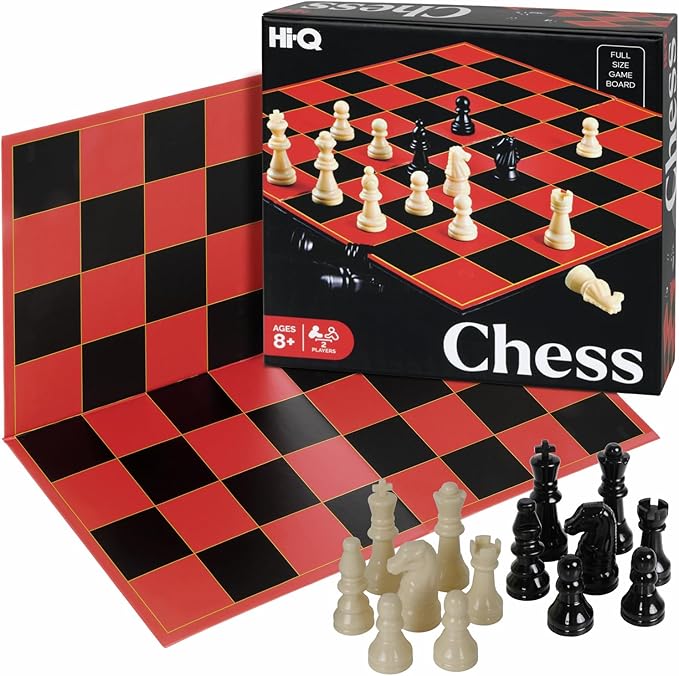
Hi-Q Classic Chess Board Game, Educational Strategy Set
A solid wood tournament-style chess set with weighted pieces and a felted board. There is nothing here to bend, warp, or melt — just hardwood and a lifetime of games. A good fallback when you want a quick two-player strategy session and the trains are still drying. Hi-Q Classic Chess on Amazon.
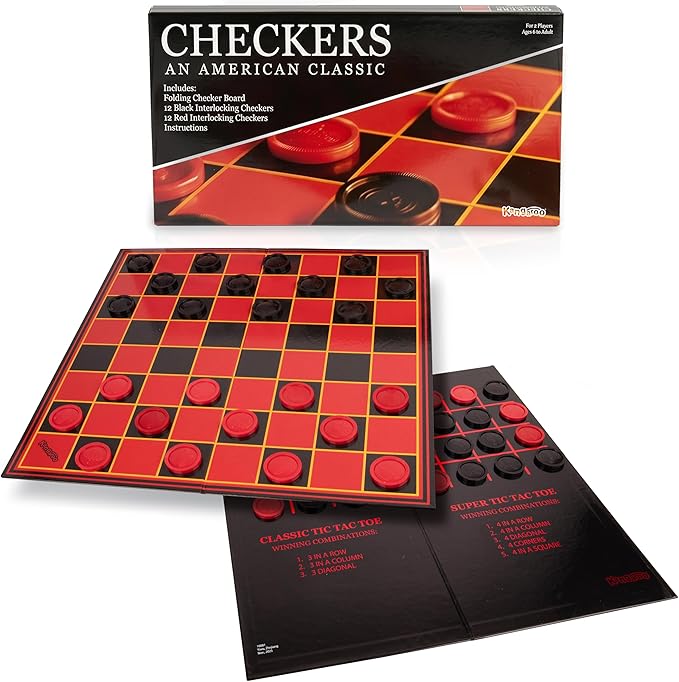
Hi-Q 3-in-1 Chess, Checkers & Tic-Tac-Toe Folding Set
Same wood-based construction as the standalone chess set, with three classic games on one folding board. Doubles as a clean travel option that won't have the storage failure modes plastic-piece games suffer from. Hi-Q 3-in-1 Folding Set on Amazon.
Kangaroo Multiplayer Strategy Checkers Board Game
A four-player checkers variant that scratches the same "competitive route-building" itch as Ticket to Ride. Heavier pieces, no insert worries, and a different player count than chess. Kangaroo Strategy Checkers on Amazon.
| Game | Players | Material | Bend risk |
|---|---|---|---|
| Hi-Q Classic Chess | 2 | Solid wood | None |
| Hi-Q 3-in-1 Folding Set | 2 | Wood / folding | None |
| Kangaroo Strategy Checkers | 2–4 | Wood / plastic pieces | Very low |
For more on building out a balanced shelf, see our roundup of best classic strategy board games of 2026.
Frequently Asked Questions
Can I use boiling water to fix bent Ticket to Ride trains?
You can, but you shouldn't. Boiling water at 212°F sits above the softening point of the polystyrene Days of Wonder uses. A brief 5–10 second dip is sometimes survivable, but anything longer can blur the molded details and leave the surface hazy. The 140–160°F warm-water method works just as well with a 40-degree safety margin.
Will a hair dryer melt my Ticket to Ride trains?
Not on the low heat / low fan setting if you keep the dryer at least 8 inches away and never stop moving it. The danger comes from parking the airstream in one spot or using high heat — consumer hair dryers can output 140°C+ at the nozzle, which will absolutely deform the plastic if held still. Treat it like spray painting: constant motion, even passes.
Why are my Ticket to Ride trains warped straight out of a brand-new box?
Almost always shipping or warehouse storage. Games stored in non-climate-controlled distribution centers during summer can sit at 130°F+ for weeks. The pressure of the cards above them molds the bend in permanently. The warm-water method fixes new-from-box warping the same way it fixes older damage, and Days of Wonder will also replace pieces under their lifetime component policy if you contact their customer service.
How do I fix a Ticket to Ride train that's twisted, not just bent?
Use the warm water bath, but do two passes — once with the train clamped flat on its base, then once rotated 90 degrees with the side held flat. The plastic re-sets on each axis independently. For severe twists, you may need a small jig (two pieces of basswood with a train-shaped channel) to hold the geometry while it cools.
Can I straighten Ticket to Ride trains in cold water alone?
Only for very mild, recent bends — and even then, you're really relying on a long cold press (48–72 hours under a book) rather than the water itself. Cold water has no softening effect on polystyrene. For anything beyond a slight bow, you need to add controlled heat.
Does this method work for Ticket to Ride: Rails & Sails ship pieces too?
Yes. The ships are molded from the same HIPS material as the trains and respond identically. The masts are thinner and more flexible, so use a slightly shorter warm-water dip (20 seconds instead of 30) and be gentler with the flattening pressure.
What if I already melted a Ticket to Ride train trying to fix it?
Once the surface has gone glossy-smooth or sagged out of shape, the molded detail is gone for good — there's no way to re-engrave it. Your best option is to email Days of Wonder customer service at customerservice@daysofwonder.com with a photo and the game's batch code. They have replaced individual trains for free for years and will usually send a small bag of replacement colonies. Going forward, stick to 140–160°F water and you won't need to use that policy again.
Are there any games where the plastic doesn't bend like this?
Wood-component games (most classic abstracts, many Euro-style worker placement games) sidestep the problem entirely. If your shelf skews heavily toward plastic-miniature games, mixing in a few wood-based titles like the Hi-Q chess or folding sets above is an easy way to give yourself "no maintenance" options for shorter sessions. See also our list of board games with the most durable components for the full rundown.
Key Takeaways
- Choosing the right how to fix bent ticket to ride trains without melting the plastic means matching capacity and output ports to your actual devices
- Always check actual watt-hours (Wh), not just watts — runtime depends on Wh, not peak output
- Also covers: straighten warped Ticket to Ride trains
- Also covers: repair Ticket to Ride plastic pieces
- Also covers: fix broken Days of Wonder train pieces
- Compare price-per-Wh across models to find the best value for your budget