If you just hauled a soggy Monopoly box out of a flooded basement, you're probably staring at fuzzy green spots on the board, swollen cards, and a smell that won't quit. Here's the short answer on how to clean mold off old Monopoly board from flooded basement storage: take the set outside, separate every piece, kill surface mold with a 1:1 white vinegar and distilled water solution applied with a microfiber cloth, never soak the cardboard, dry each component flat under a fan for 48–72 hours, then quarantine the set for two weeks to confirm the mold is dead before bringing it back inside. The full process below covers what to save, what to toss, and when replacement is the smarter call.
First Assessment: Is the Set Worth Saving?
Before you spend three hours scrubbing, do a triage. Spread everything out on a tarp in a garage or driveway — never indoors, because moving a moldy box through your house spreads spores. Sort each piece into three piles:

- Save — plastic tokens, metal pawns, dice, and the plastic houses/hotels. These are non-porous and will clean up completely.
- Maybe — the folding board, Chance/Community Chest cards, property deeds, and the inner cardboard tray. These are porous but can sometimes be rescued if the mold is surface-level.
- Toss — any piece that is structurally collapsing, has black mold (Stachybotrys), or smells strongly even after drying. Black, slimy, or deep-rooted mold on cardboard is almost never worth the health risk.
- Dry brush first. Use a soft natural-bristle brush (a clean shoe brush works) to flick off any loose mold growth into a trash bag. Brush outdoors and away from your face.
- Vacuum with HEPA. Run a HEPA-filter vacuum over both sides of the board. Standard shop-vacs blow spores back into the air — only HEPA captures them.
- Mix 1:1 white vinegar and distilled water in a spray bottle. Distilled matters because tap water minerals can leave rings on the printed surface.
- Lightly mist a microfiber cloth — never spray the board directly. Wipe in one direction from the center outward, replacing the cloth section as soon as you see green or black transfer.
- Tackle stubborn spots with a cotton swab dipped in undiluted vinegar. Dab, don't scrub — scrubbing lifts the printed top layer.
- Neutralize with a barely-damp clean cloth wiped with plain distilled water, then immediately dry-pat with a fresh microfiber.
- Lay flat on a wire rack with a fan blowing across (not at) the board for 48 hours minimum. Flip every six hours.
If more than half the cardboard pieces fall into the "toss" pile, skip to the replacement section below. Trying to restore a deeply contaminated set isn't worth the spore exposure.
Safety Gear You Need Before You Start
Mold cleanup isn't dusting a shelf. Flood-soaked cardboard often grows multiple species, and disturbing it sends spores airborne. Before you touch anything, put on an N95 or P100 respirator (a cloth mask doesn't filter mold spores), nitrile gloves (latex breaks down with vinegar), safety glasses or goggles, and clothes you can wash hot or throw out. Work outdoors or in a garage with the door open. Never use bleach on cardboard — it doesn't penetrate porous materials, it warps the printing, and the chlorine fumes are dangerous in an enclosed space. Vinegar penetrates better and kills roughly 82% of mold species at full strength.
Step-by-Step Mold Removal for the Monopoly Board
The folding game board is the centerpiece, and it's the trickiest piece because the surface is printed cardboard laminated onto a chipboard backer with a fabric hinge. Soak it and it delaminates forever. Here's the safe process for how to clean mold off old Monopoly board from flooded basement storage without destroying the print:
If the cardboard still smells musty after 48 hours of airflow, dust the dry board with a thin layer of cornstarch or baking soda, leave it for 24 hours, then vacuum off with HEPA again. Repeat until the smell is gone.
Cleaning the Money, Cards, and Deeds
Paper money and the Chance/Community Chest cards are the hardest items to save. If they're stuck together in a brick, gently fan them out before they fully dry — once paper bonds, it tears when you separate it. For each piece, lay it between two sheets of clean parchment paper, press lightly with a warm (not hot) iron to flatten and drive out residual moisture, wipe each side with a vinegar-dampened microfiber one card at a time, then air dry on a rack for 24 hours. Store sorted stacks in archival polypropylene sleeves — never PVC, which off-gasses and yellows paper.
If the property deeds are an early edition (pre-1985 thick cardstock or the rare 1935 first run with the dark blue back), stop and consult a paper conservator before cleaning. A botched DIY job on a collectible board can drop its value by 80%. See our guide to restoring vintage Monopoly editions for which years are worth professional treatment.
Cleaning the Plastic Tokens, Dice, and Houses
This is the easy part. Plastic and metal pieces can be fully submerged. Run a sink of warm water with a tablespoon of dish soap and a quarter cup of white vinegar. Let the pieces soak 15 minutes, agitate, drain, rinse in clean water, and air-dry on a clean towel. For the metal tokens (the dog, top hat, etc.), dry immediately to prevent rust spots, then wipe with a microfiber lightly dampened with mineral oil.
Drying, Storage, and the Two-Week Quarantine
Even after you've worked through how to clean mold off old Monopoly board from flooded basement storage end-to-end, spores can lurk in cardboard fibers and bloom again at the first hint of humidity. Quarantine the set for two weeks in a dry, low-humidity room (under 50% RH — a $15 hygrometer pays for itself). Check daily for any new growth. If nothing appears, you can return the set to play.
For permanent storage, never put a game box on a concrete basement floor again. Concrete wicks moisture even when it looks dry. Use a sealed plastic tote with a silica gel desiccant pack, stored at least 18 inches off any concrete surface. Our walkthrough on how to protect board games in a humid basement covers shelving height, dehumidifier sizing, and which storage bins actually seal.
When to Replace Instead of Restore
Sometimes the honest answer is that the set is too far gone. Black mold, structural pulp damage, or any growth on more than 40% of the board means the smart move is to recycle the contaminated set (double-bagged, taken to the curb the morning of collection) and start fresh. A new standard Monopoly runs about $20, but if you're rebuilding a family game shelf from scratch after a flood, this is a chance to upgrade to classics that will outlast another basement leak. The picks below are durable, low-cost, and store flat — which matters when you've just learned what humidity does to a cardboard box.
Hi-Q Solid Wood Deluxe Mancala Folding Board Game
If you're rebuilding a game shelf post-flood, solid wood is the upgrade move. Mancala stores closed with the stones inside, so there are no loose cards or paper money to soak if disaster strikes again. The folding hinge is real wood with metal hardware, not glued cardboard, which means a damp basement won't delaminate it. Two-player, fast setup, works for kids learning math through play. Check current price on Amazon.
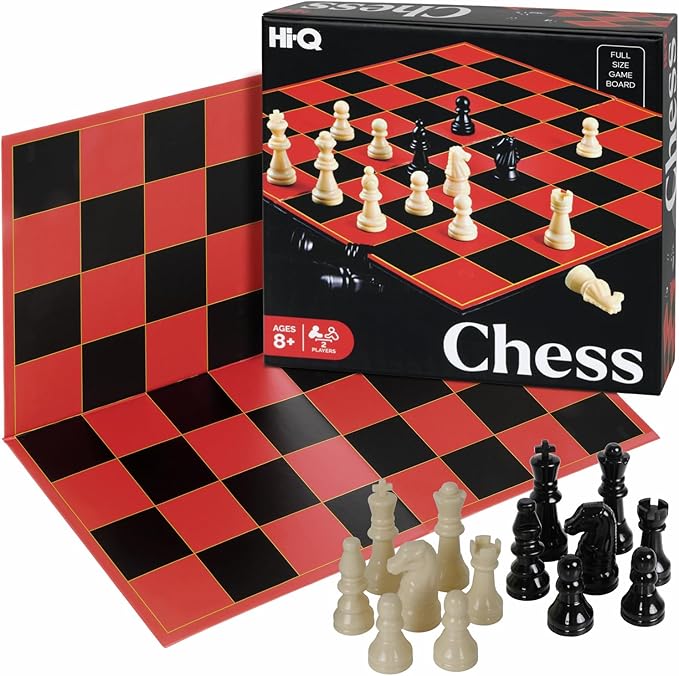
Hi-Q Classic Chess Board Game, Educational Strategy Set
A wooden chess set survives flooding far better than a cardboard game. The pieces are solid wood, the board folds and latches shut as the storage box, and there are no consumable paper components to ruin. If your kids outgrew Monopoly anyway, this is the natural next step — strategy depth without dice luck. Check current price on Amazon.
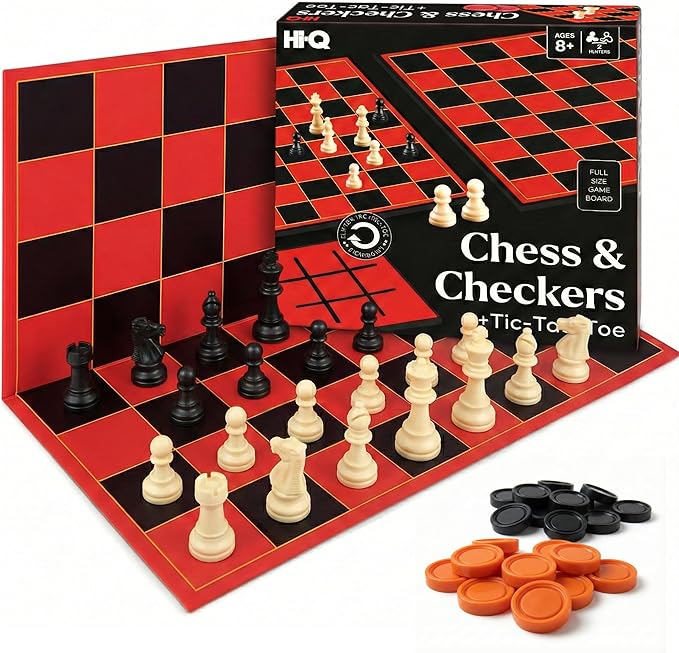
Hi-Q 3-in-1 Chess, Checkers & Tic-Tac-Toe Folding Set
For families replacing a single moldy Monopoly with maximum value-per-dollar, this 3-in-1 covers three classic games in one wood box. The folding design self-stores all pieces inside, latched shut. If your basement is still drying out and you want one rugged game while you decide what else to buy, this is the pick. Check current price on Amazon.
Kangaroo Multiplayer Strategy Checkers Board Game
Designed for up to four players, this checkers set extends past two-player limits and gives bigger families the same round-the-table feel that made Monopoly a Sunday-night staple. Build quality is sturdier than the dollar-store checkers sets you might be tempted by while shopping fast after a basement cleanup. Check current price on Amazon.
PRO-SPIN Portable Ping Pong Set with Retractable Net
Not a board game, but worth mentioning if your basement is now an empty space waiting for a new use. A retractable net clamps to any table 4 feet or longer and turns the room you cleared into a rec space. Stores in a small zip case on a shelf — no water exposure risk. Check current price on Amazon.
Quick Comparison: Flood-Resistant Replacement Picks
| Product | Material | Players | Stores Flat | Paper Components |
|---|---|---|---|---|
| Hi-Q Mancala | Solid wood | 2 | Yes | None |
| Hi-Q Classic Chess | Solid wood | 2 | Yes | None |
| Hi-Q 3-in-1 | Solid wood | 2 | Yes | None |
| Kangaroo Checkers | Wood/composite | 2–4 | Yes | None |
| PRO-SPIN Ping Pong | Nylon/metal | 2–4 | Zip case | None |
Notice the pattern — every pick above has zero paper components and stores in its own protective shell. That's not an accident. Hardcover games and wooden sets survive humidity events that destroy cardboard boxes. For a deeper roundup, see our list of classic board games worth collecting in 2026.
Frequently Asked Questions
Can you save a Monopoly board with black mold from a basement flood?
Usually no. Black mold (often Stachybotrys chartarum) penetrates deep into cardboard fibers where surface cleaning can't reach, and it produces mycotoxins that pose real health risks during handling. If the mold is fuzzy white, gray, or light green and only on the surface, vinegar treatment works. If it's slimy, black, or has spread across more than 40% of the board, double-bag the set and recycle it.
Does vinegar actually kill mold on cardboard, or just bleach the spots?
White vinegar kills roughly 82% of mold species, including most common indoor varieties, because the 5% acetic acid disrupts the cell membrane. It doesn't just bleach — the spots fade because the mold is dead and brushable. Bleach, by contrast, only lightens the visible stain on porous materials while leaving root structures alive underneath, which means regrowth within weeks.
How long does it take to dry a wet cardboard game board safely?
Plan on 48 to 72 hours minimum with a fan blowing across the board (not directly at it) in a low-humidity room. Flip the board every six hours so both sides dry evenly. Rushing the dry with a hair dryer warps the cardboard, and microwaving anything with metallic ink will scorch it. Patience beats heat every time.
What humidity level prevents mold from coming back on board games?
Keep storage humidity below 50% relative humidity, ideally 30–40%. Buy a $15 digital hygrometer, place it next to your game shelf, and run a dehumidifier if readings climb above 55%. Basements often sit at 65–80% RH year-round — that's prime mold territory, which is exactly why your Monopoly grew fuzz in the first place.
Can I put a moldy game box in the dishwasher or washing machine?
Don't. Dishwasher heat destroys printed surfaces, and the wash cycle pulps cardboard. For the plastic tokens and dice only, the top rack of a dishwasher on a low-heat cycle is fine, but never run the board, cards, money, or original box through any water-immersion cleaning. Surface-wipe only.
Is it safe to play with a Monopoly set that had mold even after cleaning?
Yes, after a successful two-week quarantine with no regrowth, and only if cleanup was done with proper PPE. If anyone in the household has asthma, mold allergies, or a compromised immune system, replace the set instead — residual spore exposure from old cardboard isn't worth the risk. A new copy is $20.
What's the best long-term storage for board games to prevent flood damage?
Sealed plastic totes with rubber gaskets (Iris brand or equivalent), stored on metal shelving at least 18 inches above the floor, in a room with a dehumidifier targeting 40% RH. Add a silica gel desiccant pack inside each tote and replace it yearly. See our full breakdown of best board game storage solutions for 2026 for shelving picks and tote comparisons.
Key Takeaways
- Choosing the right how to clean mold off old monopoly board from flooded basement storage means matching capacity and output ports to your actual devices
- Always check actual watt-hours (Wh), not just watts — runtime depends on Wh, not peak output
- Also covers: remove mildew vintage monopoly board flood
- Also covers: clean moldy board game cardboard basement
- Also covers: restore water damaged monopoly board
- Compare price-per-Wh across models to find the best value for your budget