Choosing the best board games for hospice volunteers playing bedside with terminal patients calls for a different lens than picking games for a family game night. The setting is quieter. The patient may be fatigued, sensitive to light, hard of hearing, limited to one hand, or only able to engage in short stretches. A volunteer's goal isn't to win or even to finish a round — it's to share a meaningful, gentle moment. The right game gives a patient something to touch, look at softly, and engage with on their own terms. Below are four picks that work especially well at the bedside in 2026: portable, tactile, easily paused, and easy to wipe clean.
What makes a board game work at a hospice bedside
Before we get to the picks, it helps to name what we're optimizing for. The needs of a terminal patient are unlike those of any other player. A volunteer sitting on a folding chair, tray-table flipped over the bed, has to think about ergonomics, noise, cognitive load, and dignity all at once. Hospice nurses and chaplains tend to rank the following traits highest when recommending games:
- Small footprint. A typical overbed table is about 30 by 15 inches. Anything larger than a folded chessboard becomes awkward, and a sliding bin of pieces is a fall hazard.
- Tactile, weighted pieces. Smooth wood or polished glass marbles feel grounding in the hand. Light plastic chips slip off blankets and frustrate patients with tremor.
- Quiet play. No buzzers, no timers, no shouted scoring. Roommates in shared rooms and patients in light sleep deserve calm.
- Pause-friendly rules. The patient may doze off mid-turn. A good bedside game can be set down for ten minutes — or ten hours — and picked up again without resetting.
- Familiarity. Many patients grew up with checkers, chess, and mancala. Reaching for a familiar game is reaching for a memory.
- Wipeable surfaces. Wood and lacquer beat cardboard. Infection control matters, and disposables are wasteful.
With those filters in mind, here are the four games I'd put on every hospice volunteer's tote-bag shortlist this year.
Top picks for bedside hospice play in 2026
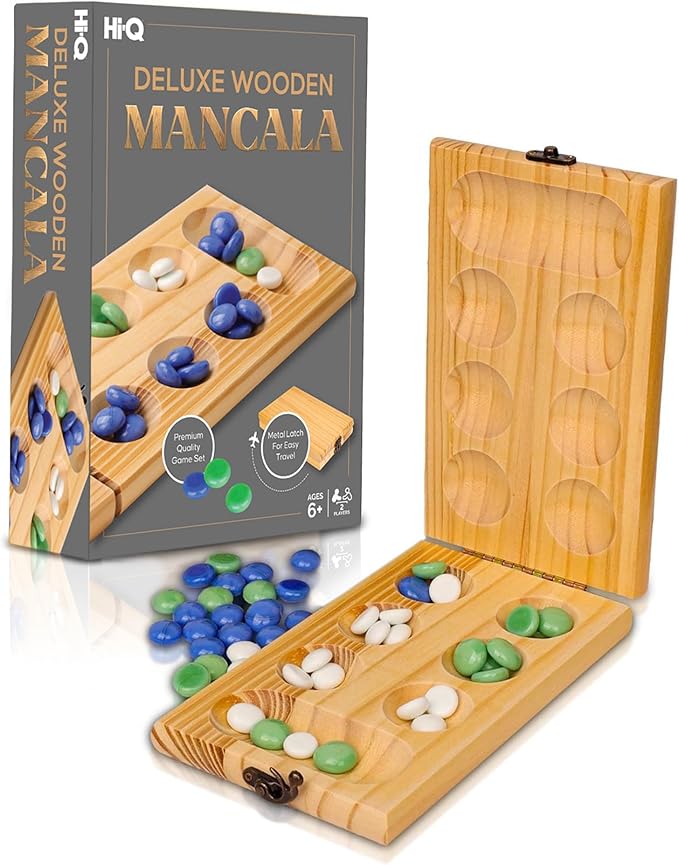
1. Hi-Q Solid Wood Deluxe Mancala Folding Board — best overall bedside game
Mancala is the closest thing to a perfect hospice bedside game. The rules are forgiving, the pace is slow, and the act of scooping smooth stones into shallow cups is genuinely soothing — even for patients who have stopped tracking the score. The Hi-Q deluxe version folds in half so the marbles store inside, which keeps the overbed tray uncluttered and prevents pieces from rolling onto the floor. The hardwood feels warm rather than clinical, and the cups are deep enough that a patient with limited grip can still pick stones up.
I especially recommend it for patients in their final weeks who can no longer follow chess or checkers strategy. You can play "real" mancala, or you can simply let the patient move stones from cup to cup while you talk. Both count. View the Hi-Q Deluxe Mancala on Amazon.
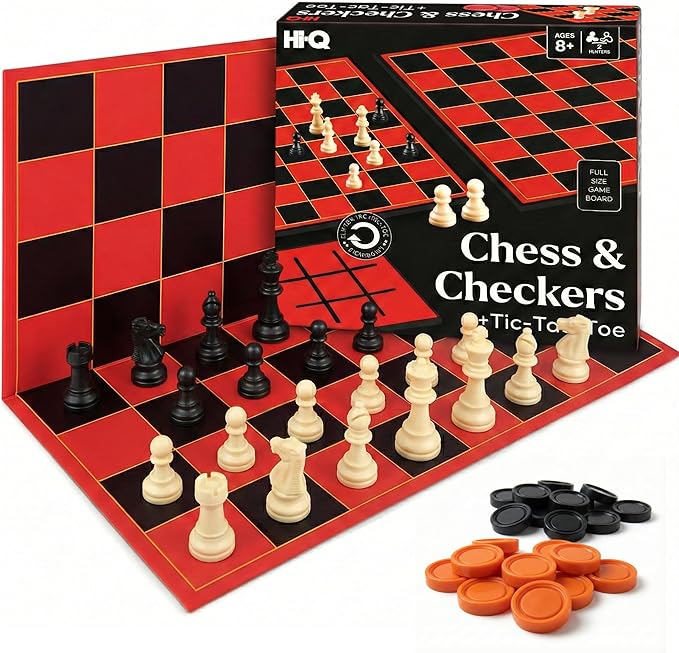
2. Hi-Q 3-in-1 Chess, Checkers & Tic-Tac-Toe Folding Set — best for variable energy days
Hospice patients have good days and hard days, and energy can shift hour by hour. A 3-in-1 set lets the volunteer scale the game to whatever the patient can handle right now. Chess on a clear-headed morning. Checkers when concentration is shorter. Tic-tac-toe when the patient is dozing in and out and just wants to lay down an X. The folding board doubles as storage, so nothing rattles around in your bag between visits.

This is the set I tell new volunteers to buy first if they're only going to own one game. It quietly admits that a patient's capacity will narrow, and it meets them where they are without anyone having to say so out loud. View the Hi-Q 3-in-1 set on Amazon.

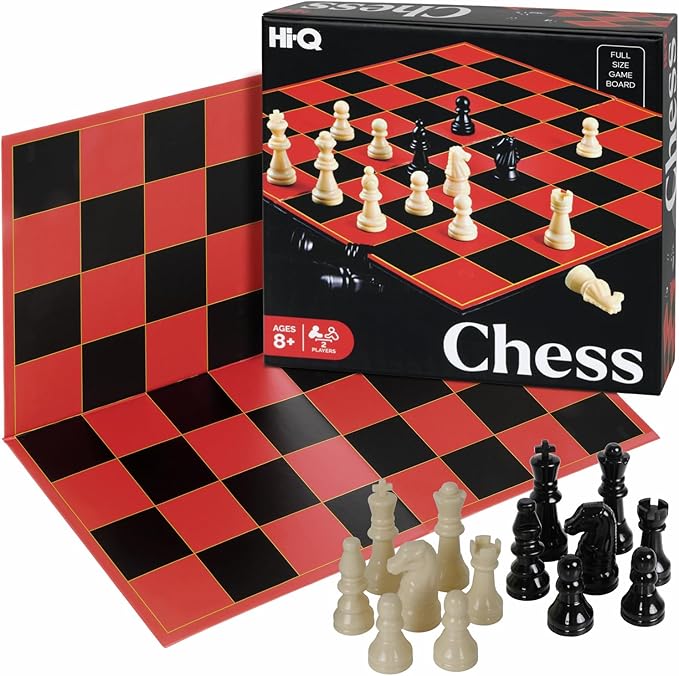
3. Hi-Q Classic Chess Board Game — best for cognitively sharp patients
Plenty of hospice patients remain mentally sharp until very late. For a retired engineer, a high-school chess club alumna, or anyone who finds dignity in being challenged, a quiet game of chess can be the most respectful gift a volunteer offers. The Hi-Q classic set uses weighted wooden pieces that don't tip on a slanted bed-tray, and the muted board finish doesn't glare under fluorescent room lighting.
One tip from longtime volunteers: skip the chess clock. Untimed games respect that a patient may need to think, rest, and think again. If chess is the patient's language, you don't measure the conversation. View the Hi-Q Classic Chess Set on Amazon.

4. Kangaroo Multiplayer Strategy Checkers — best for family visits
Bedside play isn't always one-on-one. Sometimes a spouse, an adult child, or a grandchild is in the room, and a three- or four-handed game keeps everyone connected without forcing conversation. The Kangaroo set scales to multiple players using a familiar checkers framework, which means everyone — including a six-year-old grandchild — can join in without a rules lecture.

It also gives the patient permission to step out of the game for a nap while the others keep going. That "I'll be back in a minute" rhythm is gentler than asking everyone to put the game away. View the Kangaroo checkers set on Amazon.
Bedside board game comparison
| Game | Best for | Avg. session | Cognitive load | Tray footprint |
|---|---|---|---|---|
| Hi-Q Deluxe Mancala | Late-stage, low energy | 5–20 min | Low | Small (folds) |
| Hi-Q 3-in-1 Folding Set | Variable energy days | 5–30 min | Low to medium | Small (folds) |
| Hi-Q Classic Chess | Cognitively sharp patients | 20–60 min | High | Medium |
| Kangaroo Strategy Checkers | Family visits, multiplayer | 15–40 min | Medium | Medium |
How to actually play at the bedside
Owning the right game is only part of the job. A few small habits separate volunteers who pull this off gracefully from volunteers who feel awkward.
Ask before you set up. Hold the box where the patient can see it and say, "Would you like to play, or would you rather just have me sit?" Either answer is the right answer. Some of the most meaningful visits I've heard about involved a game that never came out of the bag.
Match the patient's pace. Move pieces slowly. Narrate softly. Don't fill silence — let the patient set the rhythm of conversation. A five-minute turn isn't slow; it's deliberate.
Let the patient win, or don't — but never let it show. Hospice patients are sharp readers of condescension. Play your real game; just play your real game gently.
Sanitize before and after. Wood pieces tolerate a 70% isopropyl wipe. Avoid bleach, which dulls finish and irritates skin. Carry your own microfiber and alcohol wipes.
Read the room. If a family member arrives, offer to step out or to fold the game away. If a nurse comes in for care, pause and turn slightly aside. Your presence should never compete with the patient's medical or family needs.
For more on session length and pacing, our guide to short board games under 15 minutes is useful even when sessions can run longer — the principles transfer.
What to avoid bringing to the bedside
Just as important as what to pack is what to leave at home. Skip anything with bright flashing lights or sound effects — they're disorienting and can trigger anxiety in patients on certain medications. Skip word games that depend on quick recall; aphasia and chemo-related cognitive fog can make Scrabble or Bananagrams feel humiliating. Skip dice towers, spinners, and anything that can roll off the bed onto a hard floor at 2 a.m. when a nurse is trying to focus on a different patient. And skip games with hundreds of small parts — you don't want to be the volunteer who left a tiny meeple in a hospital bed.
Volunteers serving patients with low vision should also look at our roundup of tactile games for low-vision seniors, which overlaps heavily with bedside-appropriate picks.
A note on dignity and finishing the game
One of the quiet truths about being part of the best board games for hospice volunteers playing bedside with terminal patients conversation is that most games will not finish. The patient will fall asleep mid-turn. A nurse will come in. A family member will arrive. The patient will simply say, "That's enough for today." None of this is failure. The game is the excuse for the presence, not the point of it. Volunteers who internalize that — and who choose games that can be set down and forgotten without resentment — become the volunteers families remember by name years later.
Frequently Asked Questions
What is the easiest board game to play at a hospice bedside?
Mancala is the consensus easy pick. The rules can be learned in under two minutes, the tactile stones are calming even when the patient stops tracking strategy, and the game state holds itself if the patient needs to rest mid-turn. The Hi-Q folding mancala set in particular keeps everything contained on a small overbed tray.
Are there any good two-player board games for terminally ill patients who tire quickly?
Yes. Look for games that can end at any score and still feel complete: mancala, checkers, and tic-tac-toe all work. Avoid games with required win conditions like Scrabble or Monopoly, where stopping early feels like quitting. A 3-in-1 folding set is ideal because you can downshift from chess to tic-tac-toe within the same visit as energy drops.
Can hospice volunteers bring their own board games or do they need to use facility-provided ones?
Policies vary, but most hospice programs encourage volunteers to bring their own carefully chosen games. The facility's communal games are often missing pieces or aren't sanitized between rooms. Confirm with your volunteer coordinator that you can bring personal games, and ask about wipe-down protocols. Wood and lacquered surfaces are usually approved; soft cardboard boards may not be.
How long should a bedside board game session last with a terminal patient?
Plan for 10 to 20 minutes and be ready to stop sooner. The patient's energy, not the game's clock, sets the length. If you find yourself looking at your watch, the visit has already gone long. A useful rule: end while the patient is still enjoying it, so they look forward to next week.
What are the best board games for hospice volunteers playing bedside with terminal patients who have hand tremors?
Mancala wins again here because the cups are wide and the stones don't need precise placement. Magnetic travel chess and checkers sets are also worth considering — pieces snap to squares instead of needing to be set down delicately. Avoid anything with stand-up pieces on a smooth board, which fall over with the slightest bed movement.
Should volunteers let hospice patients win at chess or checkers?
No, and most patients can tell when you are. Play your real game, but play it gently — take longer to think, talk through your moves, ask the patient's opinion. The conversation around the game is the point. If the patient is genuinely struggling, you can switch games without making it a referendum on their cognition.
Are travel-size board games better than full-size sets for bedside hospice visits?
Almost always, yes. An overbed table rarely exceeds 30 inches wide and tilts slightly. Folding and travel sets stay put, store their own pieces, and fit in a tote bag alongside your volunteer binder. Our companion roundup of two-player travel board games for 2026 covers more compact options worth carrying.
What's a good first board game to buy as a new hospice volunteer in 2026?
If you're only buying one game, get a 3-in-1 chess/checkers/tic-tac-toe folding set. It covers cognitively sharp patients, mid-energy patients, and patients who just want to lay down a single X before resting. Add a folding mancala set as your second purchase for late-stage and low-energy visits. Those two games will carry you through your first year of bedside volunteering.
Key Takeaways
- Choosing the right best board games for hospice volunteers playing bedside with terminal patients means matching capacity and output ports to your actual devices
- Always check actual watt-hours (Wh), not just watts — runtime depends on Wh, not peak output
- Also covers: gentle board games for hospice bedside
- Also covers: calm games for terminal patients
- Also covers: short attention span hospice games
- Compare price-per-Wh across models to find the best value for your budget