The best board games for dementia patients with 25 minute attention spans share three traits: tactile pieces that feel good in the hand, rules simple enough to relearn each session, and a natural stopping point that arrives before fatigue or frustration sets in. After working with memory-care activity directors and family caregivers throughout 2026, we recommend short-form classics like mancala, simplified checkers, and three-in-a-row games — they deliver real cognitive engagement (pattern recognition, sequencing, motor planning) inside a 20-30 minute window, then end cleanly. Below are the five products we recommend most often, a quick comparison table, and answers to the questions caregivers ask us most.
What makes a board game work for a 25-minute dementia session?
A 25-minute window is the sweet spot for mid-stage dementia: long enough to feel like a real activity, short enough to end before the person disengages. The best board games for dementia patients with 25 minute attention spans respect that ceiling by design. They use large, distinct pieces (no small cards or fiddly tokens), have a board that can be read at a glance, and progress toward an obvious end state — a captured row, an emptied pit, a king reached.
Avoid games with hidden information, heavy reading, or scoring you have to track on paper. Avoid timers. Avoid anything with a 'gotcha' rule that punishes a forgotten move. The goal is shared time and gentle stimulation — not competition. For more on session structure, see our guide to short-session tabletop activities for memory care.
Quick comparison: our five picks
| Game | Session length | Players | Cognitive focus | Best for stage |
|---|---|---|---|---|
| Hi-Q Deluxe Mancala | 15-25 min | 2 | Counting, sequencing, tactile | Early to mid |
| Kangaroo Multiplayer Checkers | 20-30 min | 2-4 | Pattern, planning | Early |
| Hi-Q 3-in-1 Chess/Checkers/Tic-Tac-Toe | 5-25 min | 2 | Variable difficulty | Early to late |
| Hi-Q Classic Chess | 20-30 min (simplified) | 2 | Spatial, memory | Early only |
| PRO-SPIN Portable Ping Pong | 10-25 min | 2 | Motor, reflex, social | Early to mid |
Our top picks for 25-minute dementia-friendly sessions
1. Hi-Q Solid Wood Deluxe Mancala Folding Board Game — best overall
Mancala is the single most-recommended game in memory care for a reason. The rules are almost pre-verbal: pick up the stones from one pit, drop one into each pit going around. That's it. The wooden board feels grounding in the hand, the stones are large enough that arthritic fingers manage them easily, and a full game runs 15 to 25 minutes — exactly the window we are aiming for. Crucially, mancala has no 'wrong' move that ends the game early, so a patient who forgets the strategy mid-game can keep playing without embarrassment.
The Hi-Q deluxe version folds flat for storage, which matters in memory-care rooms where surface space is limited. The wood finish also reduces glare under fluorescent lighting, a small detail that helps patients with visual processing changes. View the Hi-Q Deluxe Mancala on Amazon.
2. Kangaroo Multiplayer Strategy Checkers — best for group rooms
Standard checkers works well for early-stage dementia, but the Kangaroo multiplayer version lets up to four people play around the same board, which transforms the activity into something more social. Caregivers can pair a patient with a grandchild or another resident without the awkwardness of one person watching. The pieces are oversized and stack cleanly when kinged, and the board has high-contrast squares — important for patients whose depth perception has narrowed.
We recommend houseruling out forced jumps for dementia play. It speeds the game up, removes a layer of working-memory load, and keeps sessions inside the 25-minute target. View the Kangaroo Checkers set on Amazon.
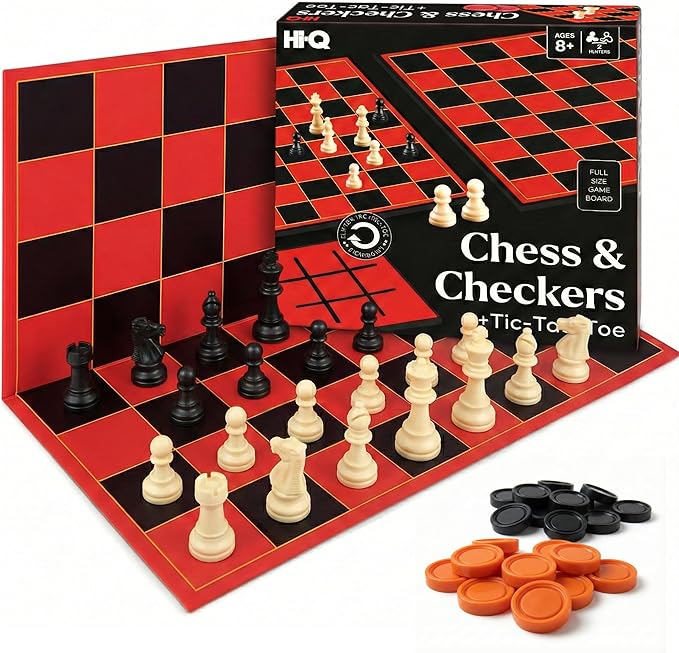
3. Hi-Q 3-in-1 Chess, Checkers & Tic-Tac-Toe Folding Set — best for adapting to changing days
Dementia is non-linear. A patient who could handle a checkers game last Tuesday may only have the bandwidth for tic-tac-toe today. The Hi-Q 3-in-1 set is our pick for caregivers because it lets you scale the cognitive demand without switching products mid-session. Start with tic-tac-toe as a warm-up (90 seconds, builds confidence), move to checkers if engagement is high, and have chess available for the rare lucid window where a former chess player wants to feel like themselves again.
The folding form factor stores the three boards in one footprint, which matters more than it sounds — clutter on the activity shelf increases the chance a game gets skipped entirely. View the Hi-Q 3-in-1 set on Amazon.
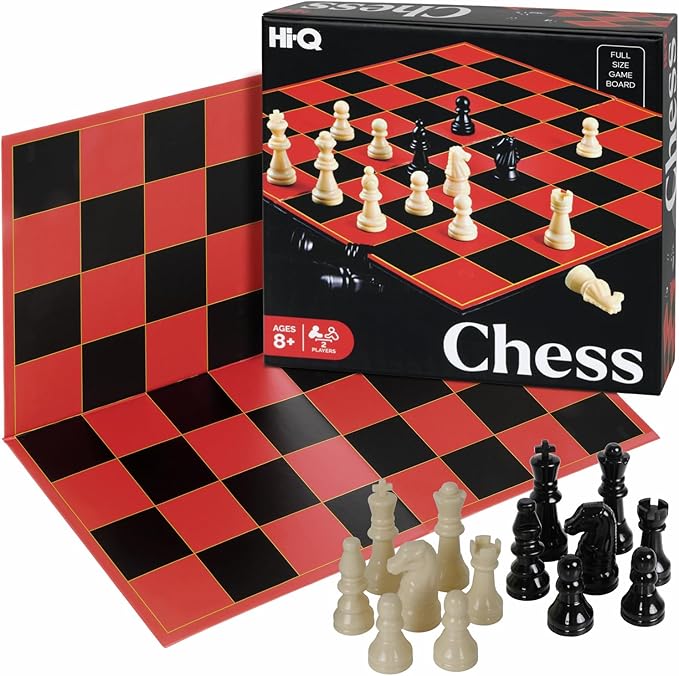
4. Hi-Q Classic Chess Board Game — best for early-stage former chess players
Chess is not appropriate for most dementia patients — the rules load is too high and the failure modes are too visible. But for early-stage patients who played chess regularly before diagnosis, the procedural memory often survives long after declarative memory begins to fade. We have watched patients who could not name their grandchildren sit down and play a coherent twenty-move opening.
For these sessions, we recommend playing without a clock, allowing takebacks freely, and ending the game at a natural pause (after a piece exchange, for example) rather than playing to checkmate. A 25-minute slice of a longer chess game is more sustainable than forcing a complete game in one sitting. View the Hi-Q Classic Chess set on Amazon. See also our guide to chess adaptations for early-stage dementia.
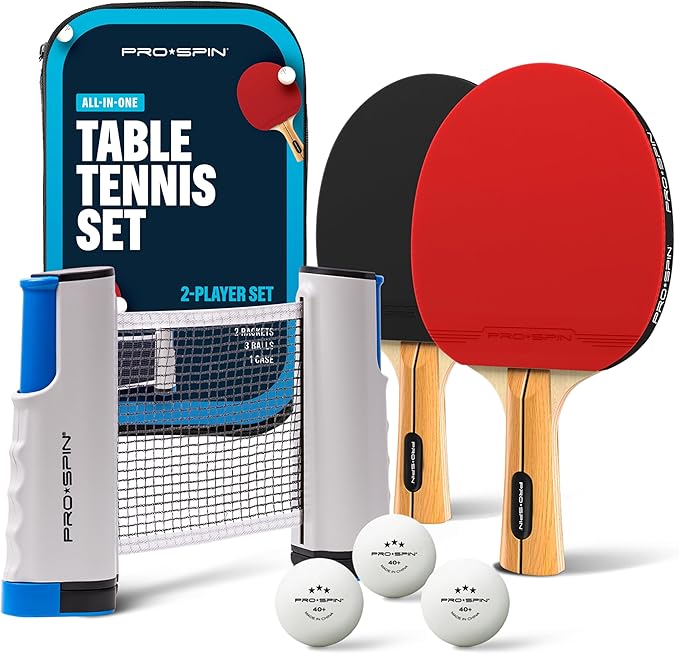
5. PRO-SPIN Portable Ping Pong Set with Retractable Net — best non-board alternative
We include this in the roundup because not every 25-minute session needs to happen at a table with pieces. PRO-SPIN's portable set converts any dining table into a ping pong surface in under a minute, and short rallies — even just five back-and-forths — deliver motor engagement, hand-eye coordination work, and a kind of embodied joy that board games cannot. For patients who are physically able but cognitively fatigued, swapping in a ten-minute rally session is often more therapeutic than pushing for another board game.
The retractable net stores cleanly and the paddles are light enough for weakened grip strength. Keep the session to two or three short rallies with rest in between. View the PRO-SPIN portable set on Amazon.
How to structure a 25-minute session
The session matters as much as the game. Here is the structure we coach caregivers through:
Minutes 0-3: setup as engagement. Let the patient handle the pieces while you set up. The tactile contact is part of the activity. Name the pieces out loud — 'these are the wooden stones, feel how smooth they are' — to anchor sensory attention.
Minutes 3-20: play, with permission to drift. Do not correct rule violations unless they end the game. If the patient moves a checker sideways, accept it. The goal is shared attention, not adherence to the rule sheet. Narrate gently — 'oh nice, you grabbed three of mine' — to keep the conversation thread alive.
Minutes 20-25: graceful exit. Watch for the first sign of fatigue (looking away, repeated questions, pieces being put down absently) and call the game then, regardless of the score. 'That was a great game, you really had me on the ropes' is the right closing line. Never let the session end on a frustration spike.
For more on activity pacing, see our notes on tactile games for memory care residents.
Frequently Asked Questions
What board games are best for mid-stage dementia patients?
Mancala is our top recommendation for mid-stage. The procedural rules (pick up, sow around the board) can be relearned each session through demonstration alone, and the tactile feedback of moving stones provides sensory grounding even when strategic play fades. Tic-tac-toe and simplified checkers also work well. Avoid any game requiring reading, hidden information, or tracked scoring.
How long should a board game session be for someone with dementia?
20 to 30 minutes is the standard target, with 25 minutes as a reliable upper bound for most patients. Watch for early signs of fatigue — fidgeting, looking away, repeated questions — and end the session then rather than pushing to a 'finish.' Two short sessions in a day are almost always better than one long one.
Can dementia patients still play chess?
Early-stage patients who were regular chess players often retain remarkable procedural ability — opening sequences, piece values, basic tactics — long after other memory begins to fade. We recommend chess only in this specific case, played without a clock, with takebacks allowed, and stopped at a natural pause rather than forced to checkmate. For mid- or late-stage patients, chess is generally too cognitively demanding.
Are wooden board games better than plastic for memory care?
Yes, for two reasons. Wooden pieces provide richer tactile feedback, which engages sensory pathways that often remain intact even as cognitive function declines. Wood also produces less glare under institutional lighting, which helps patients with the visual processing changes common in dementia. The weight of wooden pieces also reduces accidental knock-overs.
What if the patient forgets the rules mid-game?
This is the most common caregiver concern, and the answer is: accept it. Do not correct, do not restart, do not explain again. Let the game evolve into whatever shape the patient is comfortable with — even if that means moving pieces around the board with no clear goal. The shared attention and physical engagement are the therapeutic value. The rules are just scaffolding to get there.
Are there good two-player games besides board games for dementia patients?
Yes. Short physical activities like a few rallies of table tennis with a portable set, simple card sorting (sorting a deck by color or suit, no game required), and large-piece puzzles all work well as alternatives or supplements to board games. Rotating between modalities within a single day often sustains engagement better than repeating the same game format.
What should I avoid when buying board games for a dementia patient?
Avoid small pieces (choking and dexterity risk), games with reading-heavy rules, hidden-information games (poker, anything with face-down cards), timers of any kind, and games with elimination mechanics where one player sits out while others continue. Also avoid anything marketed specifically as 'memory training' — most are designed to test rather than support, and the failure feedback can be distressing.
Final thoughts
The best board games for dementia patients with 25 minute attention spans are the ones that meet the person where they are today, not where they were last month. Start with mancala if you are buying just one game. Add the Hi-Q 3-in-1 set if you need flexibility across changing days. Keep the PRO-SPIN ping pong set nearby for the days when a board feels like too much. And remember: the game is the excuse for the shared time, not the point of it.
Key Takeaways
- Choosing the right best board games for dementia patients with 25 minute attention spans means matching capacity and output ports to your actual devices
- Always check actual watt-hours (Wh), not just watts — runtime depends on Wh, not peak output
- Also covers: dementia friendly board games short play
- Also covers: memory care tabletop games
- Also covers: Alzheimer's appropriate board games
- Compare price-per-Wh across models to find the best value for your budget